Can You Walk Across The Ballard Locks?
Yes, you can walk across the Ballard Locks on foot, and the grounds are free to roam daily. Here is what to expect on the walkways, at the fish ladder, and from the deck of a locks cruise.
Can You Walk Across The Ballard Locks?
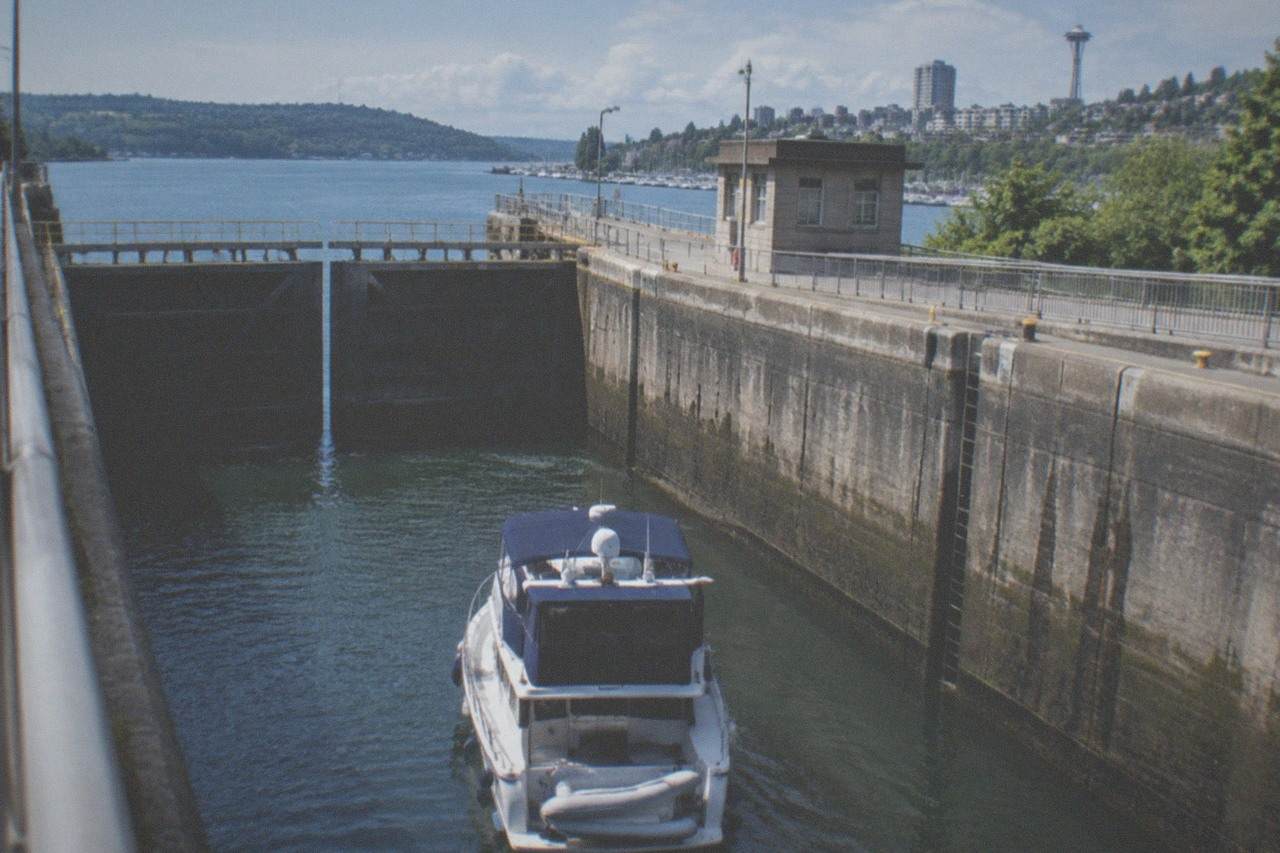
The Hiram M. Chittenden Locks, which everyone in Seattle just calls the Ballard Locks, hold a strange double identity. They are a working federal navigation facility that lifts and lowers roughly 40,000 to 50,000 vessels a year between saltwater Puget Sound and the freshwater Lake Washington Ship Canal. They are also a public park where you can stand a few feet from all of it, for nothing, on any day of the year. Very few pieces of heavy infrastructure anywhere invite that kind of closeness.
Can You Walk Across The Ballard Locks?
Yes, you can walk across the Ballard Locks. Pedestrian walkways run along both the large and small lock chambers, linking the saltwater side to the freshwater side, and the grounds are open daily from 7 a.m. to 9 p.m. with free entry at the gates. The fish ladder viewing room closes a bit earlier, at 8:45 p.m., and you can stand above the lock gates to watch boats pass through.
That is the short version, and it surprises people who assume a working lock complex would be fenced off. The U.S. Army Corps of Engineers, which has operated the locks since they formally opened on July 4, 1917, treats the site as a public attraction as much as a navigation project. The pedestrian crossing over the locks is real: walkways beside the lock gates let you pass from the Magnolia side to the Ballard side on foot, watching the water on one side sit at a different level than the water on the other. The elevation difference between the two sides runs up to about 26 feet, and it varies with the tide, so the drop you see on a given afternoon is never quite the same twice.
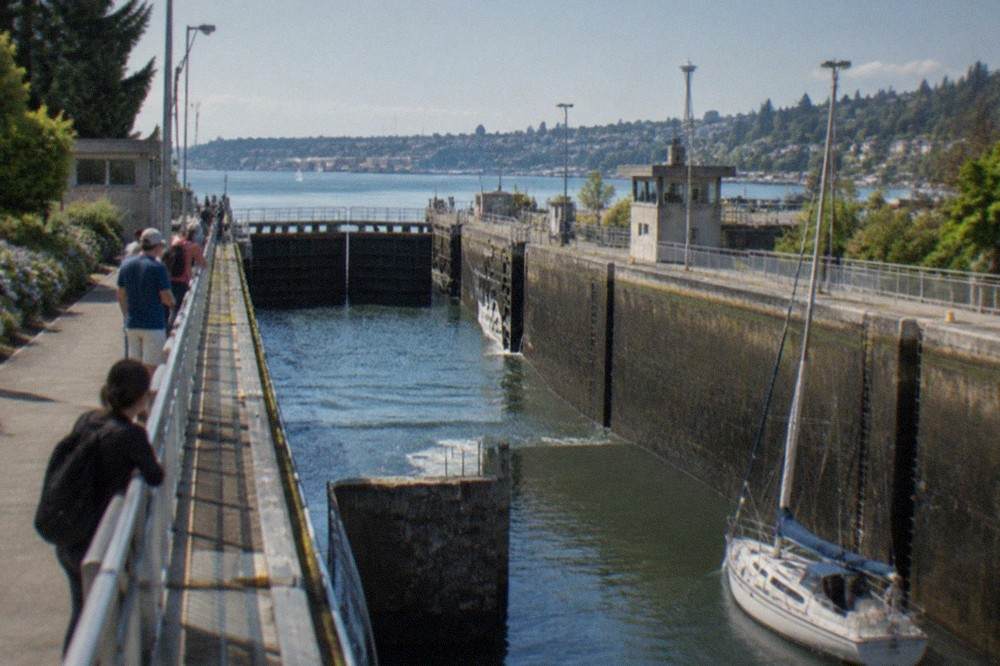
The crossing is genuinely part of the local street network. Locals walk their dogs over the locks, commuters cut through the grounds, and the gardens on the freshwater side, including a free public botanical space maintained with the Corps, draw as many idle strollers as boat watchers. If your question is whether the locks work as a pedestrian shortcut between Ballard and Magnolia, the answer is also yes, and plenty of people use them exactly that way every day.
The one thing walking cannot give you is the sensation of the lock working on you. Standing above the chamber, you watch boats drop 20-some feet as the water drains out. Sitting in one of those boats, you feel the gates close, the water fall, and the freshwater canal open ahead. Both are worth doing, and this article covers the walking side first, then the on-water alternative.
If you would rather read the full case for the boat version first, the Ballard Locks boat tours guide lays out every cruise that transits the locks, their departure points and durations.
Where Do You Enter The Ballard Locks Grounds?
The main pedestrian entrances sit at the end of the Ballard business district on the northwest side and off Commodore Way or the Magnolia bluff trail on the southwest, with the grounds open 7 a.m. to 9 p.m. every day of the year. No reservation or ticket is needed to enter, cross the walkways, or visit the gardens. The visitor center keeps seasonal hours, longer from May through September and reduced October through April.
The site has a genuinely urban set of approaches. From the Ballard side, most visitors walk down from the shops and breweries along Ballard Avenue NW and enter through the main gate near the gardens. From Magnolia, the grounds connect toward the Commodore Way entrance and the trail network along the bluff, which means the locks sit inside a normal walking neighborhood rather than behind a parking lot. Cyclists and pedestrians both use the crossing, and summer weekends bring a steady flow of both.
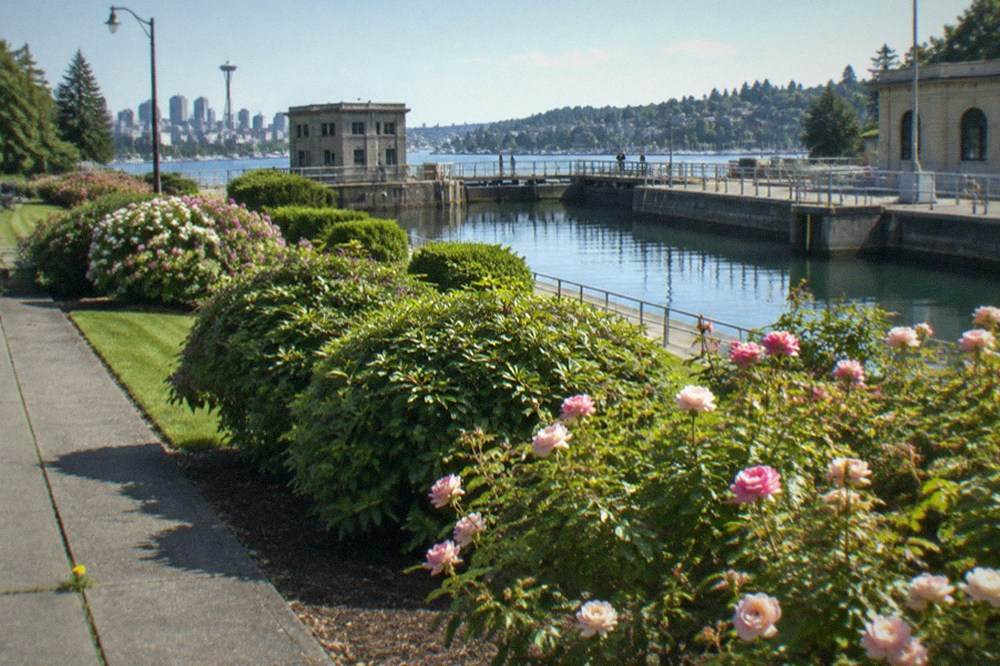
Inside the grounds, the layout is compact enough to see in an hour. The large lock, 80 feet wide and 825 feet long, handles the commercial barge traffic and most of the bigger pleasure boats. The small lock, 30 by 150 feet, takes the smaller recreational vessels and moves faster, which makes it arguably the better one to watch if you like quick, repeated transits. The fish ladder sits at the far side near the spillway, and the Carl English Jr. Gardens wrap the freshwater approach. You can stand at any of these within a ten minute walk of the entrance.
| Area of the grounds | Hours | What you can do there |
|---|---|---|
| Locks grounds and gardens | 7 a.m. to 9 p.m. daily | Walk the lock gates, cross to either side, watch boat transits |
| Fish ladder viewing room | 7 a.m. to 8:45 p.m. daily | Watch salmon through underwater windows |
| Visitor center | Seasonal, longer May to Sept, reduced Oct to Apr | Exhibits and information on the locks and the canal |
| Vessel lockage | Continuous | Boats lock through at any hour, viewable from the walkways |
A note on timing your walk: the grounds never close for the season, but the experience changes with the calendar. The salmon runs concentrate in late summer and fall, the maintenance closures concentrate in late fall and winter, and the crowds concentrate whenever the sun does. The sections below take those one at a time.
If walking the grounds leaves you curious about the chamber itself, the locks cruise from the water is the natural pairing. It runs roughly 2 hours, one way, connecting Elliott Bay and Lake Union, with departures from Pier 54 on the waterfront or AGC Marina on Lake Union. Free cancellation is on the listing, so you can hold a spot before your walking day is even firm.
What Can You See From The Fish Ladder At The Ballard Locks?
The fish ladder viewing room at the Ballard Locks lets you watch migrating salmon through underwater windows, and the runs concentrate between July and November. Chinook pass primarily from July through November, peaking in the last two weeks of August, and Coho run August through November, peaking in the last two weeks of September. The 2026 season counted a Chinook total of 13,771 and a Sockeye total of 31,302 through mid-September.
The fish ladder exists because the locks, when they were built, cut off the salmon's route between the river system behind the ship canal and the saltwater in front of it. The ladder is a stepped series of pools beside the spillway that lets fish climb past the dam, and the viewing room is built into it, with windows looking directly into the water. When a run is moving, you stand eye to eye with fish that are actively migrating, not held in a tank.
The counts from the 2026 season give a sense of how strong the late summer runs were. Through the week ending September 13, 2026, the preliminary counts showed 1,978 Chinook in a single week and 5,088 Coho in a single week, with season totals of 13,771 Chinook and 6,700 Coho at that point, alongside the 31,302 Sockeye season total. Counts were below the 2023 and 2024 totals at similar points in the season, but the late-summer showing was strong, which is the pattern the ladder's regulars have come to expect. The U.S. Army Corps of Engineers publishes the counts and the season windows on its fish ladder information page, and the viewing room's own hours, 7 a.m. to 8:45 p.m., are set so you can catch both early and late light through the windows.
If your goal is salmon rather than boats, plan around the calendar rather than the clock. A mid-August visit puts you inside the Chinook peak, and a mid-to-late September visit lines up with the Coho peak. Outside those windows the ladder is still open and the windows still work, but the fish arrive on their own schedule and nobody, including the Corps, promises them on a given afternoon.
How Does Watching A Boat Transit Compare With Riding Through The Locks?
Watching from the walkway and riding through the chamber are two different experiences of the same event. From above, you see the gates close and the water level drop up to about 26 feet over several minutes. From inside a boat, you feel the motion, hear the machinery, and get a working tour of the canal on the way, which is why the locks cruises pair a transit with narration between Elliott Bay and Lake Union.
The walking version costs nothing and takes as long as you want it to. You can arrive, watch three or four small-lock transits in half an hour, cross to the gardens, and leave. The limitation is that you only ever see the locks themselves; the canal on either side, with its houseboats, drawbridges and working fishing fleet at Fishermen's Terminal, stays out of view. For some visitors that is exactly enough, and the question of whether the whole thing is worth the trip has its own answer in the piece on whether the Ballard Locks are worth visiting.
The boat version turns the transit into the centerpiece of a route. The Seattle Locks Cruise runs about 2 hours, departing from Pier 54 on the Seattle waterfront or from AGC Marina on Lake Union, and it carries a 4.8 rating from 452 reviews with prices from $63.28. Free cancellation is on the listing. Because the transit is one way, the boat gives you the saltwater skyline of Elliott Bay on one half and the freshwater canal, with its floating homes and bridges, on the other. The listing carries a real sell-out note, "Booked 3 times today." The full index of guides sits on Seattle Boat Tours.
A second option covers the same water with a different operator and a slightly lower price: the Locks Cruise with Local Guide, 2 hours, rated 4.8 from 94 reviews, from $56 per person, also with free cancellation on the listing. Both cruises pass through the same chamber you would otherwise be standing above, and both run the same direction options, so the choice usually comes down to schedule and departure point rather than route.
| Walking the grounds | Riding a locks cruise | |
|---|---|---|
| Cost | Nothing to enter the grounds | From $56 per person for the guided cruise |
| Time needed | An hour or two at your own pace | About 2 hours, fixed departure |
| What you see | Lock chambers, fish ladder, gardens | Elliott Bay, the canal, floating homes, the transit from inside |
| Best for | Short visits, salmon season, locals on foot | Visitors who want the full canal route and narration |
| Weather exposure | Open walkways, easy to leave early | Covered and open seating varies by vessel |
The honest framing is that these are not competing options. A common pattern among visitors is to walk the grounds and watch a few transits in the morning, then take an afternoon cruise through the chamber in the opposite direction, so the machinery seen from above in the morning is felt from below after lunch. The two experiences describe each other in a way neither does alone.
When Are The Best Times To Walk The Ballard Locks?
The best time to walk the Ballard Locks is late August through September, when the Chinook and Coho runs overlap with reliably pleasant weather and full grounds hours. The large lock closes for annual maintenance November 2 to 20, 2026, and the small lock closes December 7, 2026 through January 18, 2027, so winter visits show a quieter complex. Summer weekends bring the biggest crowds and the most boat traffic.
The maintenance calendar matters more than most visitors expect. Each year the Corps drains and services one of the two chambers in sequence, and in 2026 the large lock's annual closure runs November 2 through 20, with the small lock remaining open for suitable vessels, followed by the small lock's closure from December 7 through January 18, 2027. During those windows the grounds and fish ladder stay open as usual; only the boat traffic thins, and one chamber sits dry. The Corps publishes the closure schedule on its locks closures page, and it is the single most useful thing to check before a November or December walk.
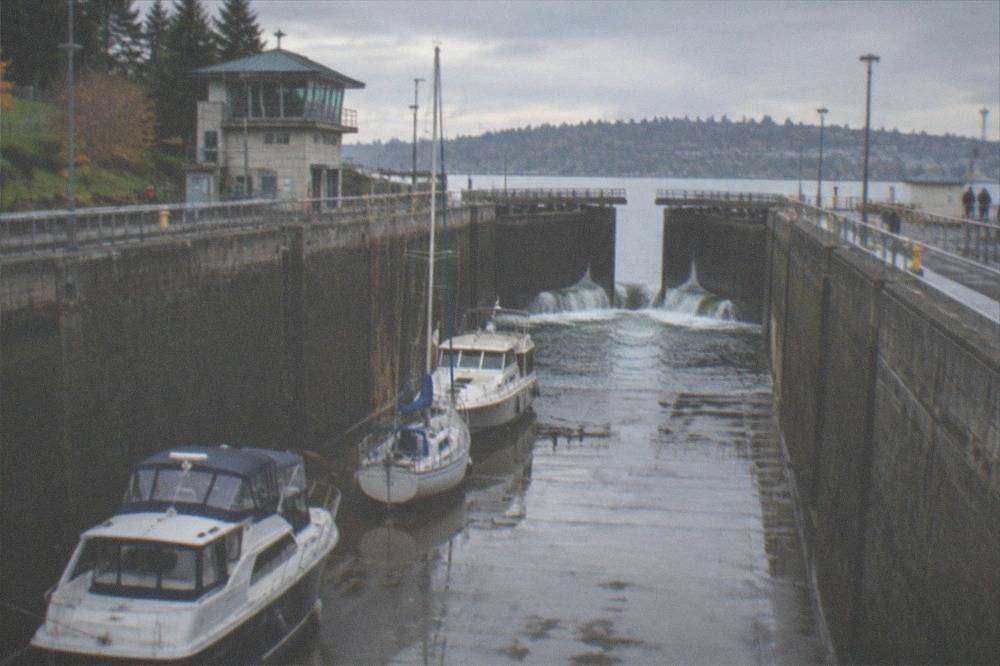
Season by season, the walking experience shifts like this. Spring brings the gardens into bloom and the first recreational boats of the year, with thin crowds and cool air. Summer is peak everything: the most boat transits, the longest daylight, the fullest walkways, and the start of the Sockeye movement. Late August and September are the sweet spot for fish, with the Chinook peak in the last two weeks of August and the Coho peak in the last two weeks of September. Fall after October keeps decent weather and emptying walkways, until the maintenance closures begin. Winter walks are quiet, sometimes atmospheric, and short on both boats and salmon.
| Season | Boat traffic | Salmon in the fish ladder | Crowd level on the walkways |
|---|---|---|---|
| Spring (March to May) | Building | Little until late spring | Low |
| Summer (June to August) | Peak | Sockeye through summer, Chinook building to an August peak | High on weekends |
| Early fall (September to October) | Strong | Chinook and Coho, Coho peak late September | Moderate |
| Late fall (November) | Reduced, large lock closed Nov 2 to 20 | Coho tapering | Low |
| Winter (December to February) | Minimal, small lock closed Dec 7 to Jan 18 | Quiet | Very low |
One more timing note: the fish ladder viewing room closed briefly in June 2026 for concrete repairs and reopened within a day, a reminder that even the viewing areas get their own maintenance. The grounds themselves have kept the same daily hours, 7 a.m. to 9 p.m., throughout, and those hours do not shorten in winter, which makes a short December walk over the locks entirely doable if you are dressed for it.
What Should You Know Before Walking The Locks In Ballard?
Bring layers and give yourself more time than the map suggests, because the walkways are exposed to wind off Puget Sound and the grounds hold attention longer than most parks. No ticket or reservation is needed for the grounds, walkways or fish ladder room. Weekend parking in Ballard fills early in summer, and the locks are also a stop on several walking routes from the waterfront, so arriving on foot is often the easier plan.
The practical details are few, which is part of the appeal. The site is compact, the surfaces are paved, and the crossing between sides takes minutes. What catches visitors out is usually the weather exposure: the lock gates stand open to the wind coming down Puget Sound, and the difference between the sheltered gardens and the gate walkways can feel like two different days. A windbreaker in July is not an overpacking decision here.
For questions this article only touches, the site has fuller answers elsewhere. The cost of transiting the locks by private boat, versus walking them for free, is covered in the piece on whether it costs money to go through the Ballard Locks, and the wider neighborhood picture, including what else to do within walking distance, sits in the Ballard Locks visitor guide. Seattle Boat Tours covers the on-water side of the same facility, from the harbor cruise that departs Pier 55 to the locks cruises that ride the chamber itself.
If your day allows only one of the two experiences, let the season decide. In late August or September, walk the grounds and give the fish ladder an hour. In any other month, the cruise through the chamber gives you more of the locks than the walkways can, because the transit, the canal and the bay all come with it.
Common Questions About Walking Across The Ballard Locks
Can You Walk Across The Ballard Locks?
Yes. Pedestrian walkways beside the lock gates connect the Ballard and Magnolia sides, and the grounds are open daily from 7 a.m. to 9 p.m. with no ticket needed. The fish ladder viewing room is open 7 a.m. to 8:45 p.m. You can watch boat transits from directly above the chambers.
Are The Ballard Locks Open Every Day Of The Year?
Yes, the grounds and the fish ladder viewing room keep the same daily hours year round, 7 a.m. to 9 p.m. and 7 a.m. to 8:45 p.m. respectively. The lock chambers themselves take turns closing for annual maintenance: in 2026 the large lock closed November 2 to 20, and the small lock is scheduled December 7 through January 18, 2027.
How Long Does It Take To Walk Through The Locks?
The crossing itself takes only a few minutes, but most visitors stay an hour or two to watch boat transits, see the fish ladder and stroll the gardens. If a salmon run is moving in late August or September, the fish ladder alone can hold your attention for an hour.
Can You See The Fish Ladder Without A Tour?
Yes, the fish ladder viewing room is inside the free public grounds, with underwater windows onto migrating salmon. Chinook pass primarily July through November, peaking in the last two weeks of August, and Coho run August through November, peaking in the last two weeks of September.
Can You Ride A Boat Through The Locks Instead Of Walking?
Yes. The Seattle Locks Cruise runs about 2 hours between Elliott Bay and Lake Union, rated 4.8 from 452 reviews, from $63.28, and a second operator runs a Locks Cruise with Local Guide, 2 hours, rated 4.8 from 94 reviews, from $56 per person. Both include the full chamber transit with narration.
When Is The Best Month To Visit The Ballard Locks On Foot?
Late August through September, when the Chinook and Coho runs overlap with warm weather and full grounds hours. The Chinook peak falls in the last two weeks of August and the Coho peak in the last two weeks of September, and the 2026 counts showed strong runs in both.