What Are The Top 5 Things To Do In Seattle?
The five experiences that define a Seattle visit, from Pike Place Market and the rebuilt waterfront to the Ballard Locks, an Elliott Bay harbor cruise, and whale watching on Puget Sound.
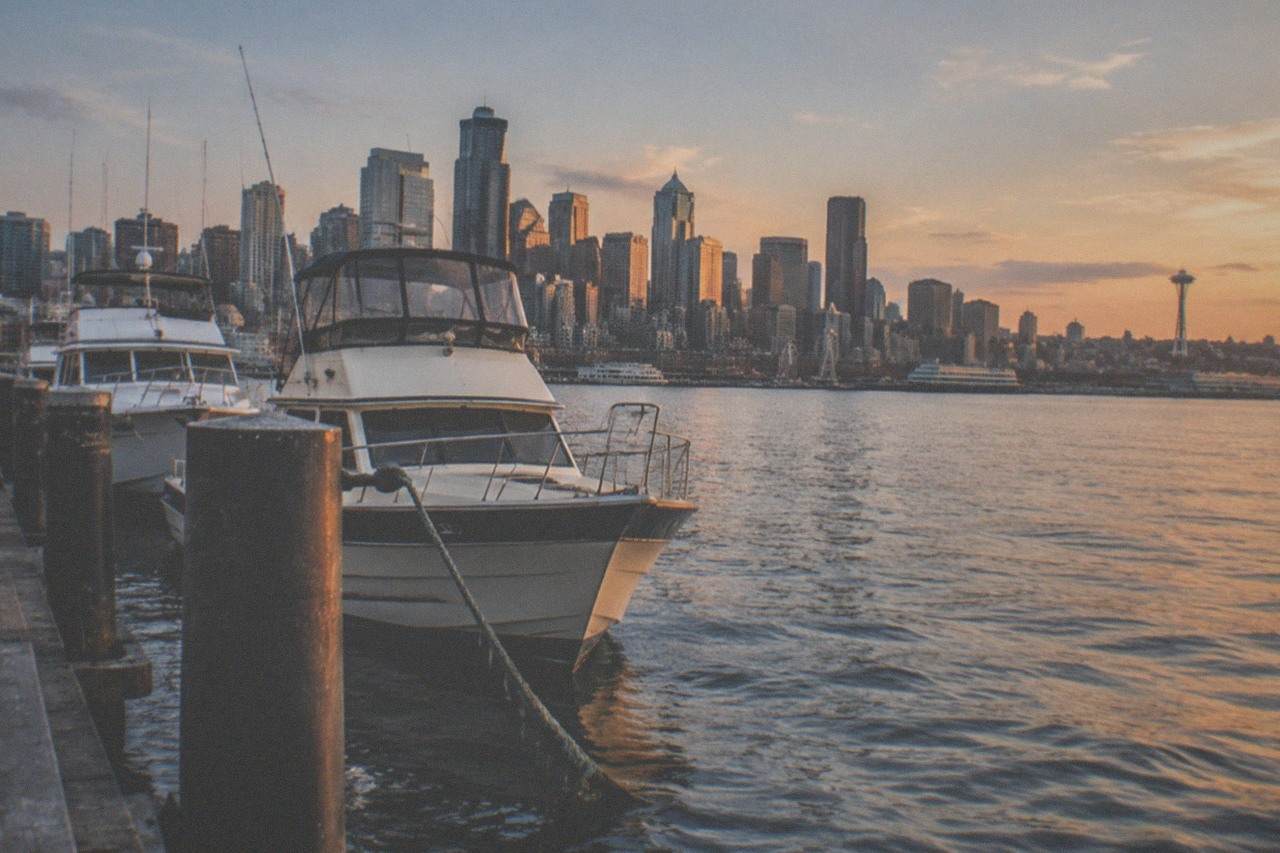
What Are The Top 5 Things To Do In Seattle?
The five experiences that consistently define a Seattle visit are Pike Place Market with the Overlook Walk, the rebuilt Waterfront Park with its aquarium and Great Wheel, the Ballard Locks, a one-hour harbor cruise on Elliott Bay, and a half-day whale watching trip into Puget Sound. Four of the five sit on or beside the water, which is why so many visitors end up on a boat before the trip is over.
That list is not a ranking. It reflects what the city actually offers at scale: a market that has anchored the waterfront for over a century, a park system that finished its largest rebuild in a generation, a working set of federal locks with a salmon ladder, and two very different kinds of boat trip, one short and urban, one long and wild. A visitor with two or three days can do all five without a car, because four of them line up along the Elliott Bay shoreline and the fifth is a short drive or bus ride northwest.
The order below moves roughly north to south and then out into the Sound, which is also a workable walking order for anyone staying downtown. Each section stands alone, so a reader who only cares about the locks or the whales can jump straight to that part. Where a price or rating appears, it comes from the operator's own listing, and the review count is printed beside every rating so the reader can judge the pool for themselves.
| Experience | Where | Time to allow | What makes it distinct |
|---|---|---|---|
| Pike Place Market and Overlook Walk | Downtown, above the waterfront | 2 to 3 hours | A working market linked to the bay by an elevated park |
| Waterfront Park, Aquarium, Great Wheel | Piers 57 to 59 | 2 to 4 hours | A 20-acre rebuilt park along Elliott Bay |
| Ballard Locks | Ballard, on the ship canal | 1 to 2 hours | Working 1917 locks with a fish ladder and gardens |
| Elliott Bay harbor cruise | Pier 55 | 1 hour | The skyline, ferries and cranes seen from the water |
| Whale watching cruise | 2701 Alaskan Way | 3 to 5 hours | Orcas, humpbacks and seals out in Puget Sound |
The boat tours on this list are worth comparing before booking, because the three main options cover very different water. The harbor cruise stays inside Elliott Bay, the locks cruise travels the ship canal between the bay and Lake Union, and the whale watching cruise heads out into open Puget Sound for half a day.
Between them, those three cover the city's water in one-hour, two-hour and half-day formats, so the choice is mostly about how much time the trip has spare. A traveler with one full day might take the harbor cruise and leave the whales for a return visit, while anyone with three days can fit both plus the locks on foot. The sections below take each of the five in turn, starting at the market.
Pike Place Market And The Overlook Walk
Pike Place Market and the Overlook Walk form the single best first stop in Seattle, because the market is a genuine working market rather than a mall, and the Overlook Walk now connects it directly to the waterfront without crossing traffic. The elevated park spans roughly a hundred feet of elevation change between the market and the bay, with plazas, terraces and views over the water.
The market itself has been the city's front door for more than a century, and its character comes from what is sold there: fish thrown across the counters, flowers by the bucket, produce from nearby farms, and crafts from small studios. It is busy, and it is busiest on summer weekends, but the lower levels and the north end thin out quickly a few steps from the main arcade. Visitors who want the classic photos should come in the first hour after opening.
The Overlook Walk changed how the market relates to the bay. It opened in late 2024 as an elevated park of roughly 60,000 square feet, linking Pike Place Market to the new Waterfront Park over the top of the aquarium, with planted terraces and open views west toward the Olympic Mountains and the container cranes. Before it existed, the trip from market to water meant crossing Alaskan Way at street level. Now it is a short ramped stroll, which matters for anyone with a stroller or a wheelchair, and it turns the market and the waterfront into one continuous visit rather than two.
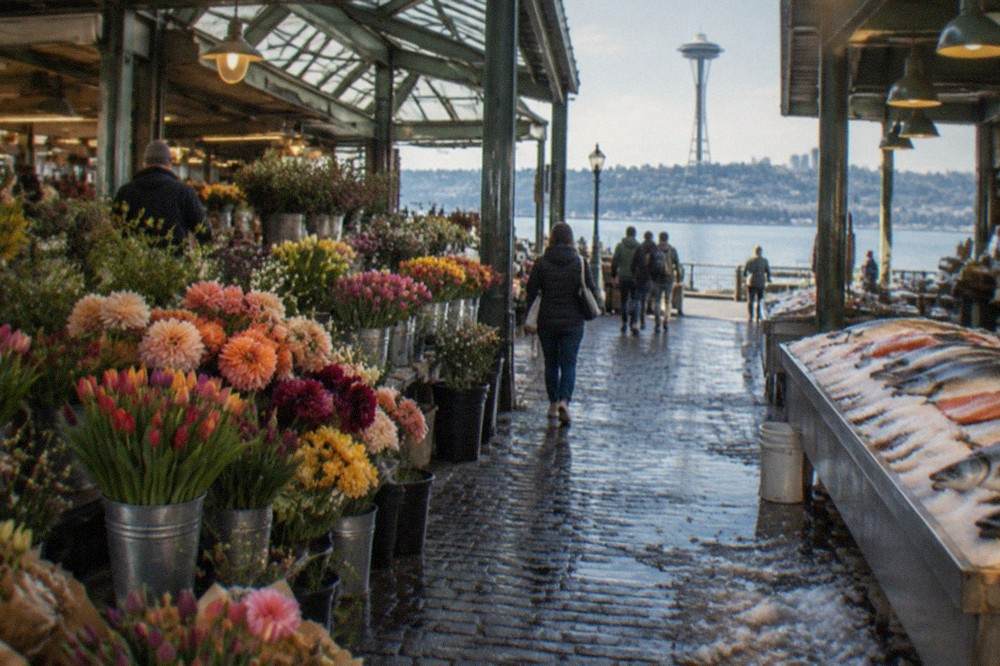
A sensible pattern is to do the market first while the stalls are at their best, then drift down through the Overlook Walk into the park and along the piers. Readers deciding whether the downtown waterfront deserves the time can find a fuller treatment in the companion piece on whether the Seattle waterfront is worth visiting, which goes deeper on the individual piers.
Since one of the five essentials is a boat, and the boats leave from piers a few minutes' walk from the market, this is also the natural moment to think about booking one. Every cruise on this site's roster carries free cancellation on its listing, so a visitor can lock in a departure before the trip and still change plans if the weather turns.
The harbor cruise departs from Pier 55, which is a short walk south along the promenade from the market end of the Overlook Walk, so the two pair naturally on the same afternoon. The listing shows a 4.7 rating from 2,252 reviews and a price from $45.7, and it runs about an hour, which leaves the rest of the day free for the waterfront attractions covered next.
Waterfront Park, The Seattle Aquarium, And The Great Wheel
The rebuilt Waterfront Park is the second essential, a roughly 20-acre strip of parkland and promenade along Elliott Bay between the piers, anchored by the Seattle Aquarium at Pier 59 and the Great Wheel at Pier 57. The full park celebrated its grand opening in September 2025, and Pier 58's playground and lawn opened earlier that summer, so this is the newest major attraction in the city.
The rebuild replaced an aging viaduct-era shoreline with gardens, public art, swings, protected bike lanes and open sightlines to the water. Pier 58, the family pier, carries a marine-themed playground, lawn and young trees, and it sits directly below the Overlook Walk, so families can move between market, park and pier in one car-free loop. The promenade itself is flat and continuous, which makes it one of the few long walks in a hilly city that works for every fitness level.
The aquarium at Pier 59 is the park's anchor tenant, with marine exhibits and the Ocean Pavilion, and the Great Wheel at Pier 57 puts riders above the bay in enclosed gondolas. Neither is covered in depth here because this list is about the five essentials, but both are the kind of stop that fills a spare hour well, and both sit within a five-minute walk of the cruise departure points.
One thing worth knowing: the record Alaska cruise season means the waterfront carries heavy foot traffic on turnaround days, because the cruise terminals at Pier 66 and Pier 91 both feed visitors into this same corridor. The Port of Seattle's own season reporting covers the dates and volumes for anyone scheduling around the ship calls. On non-cruise weekdays the park is noticeably calmer, and mornings are quietest of all.
For readers planning a full day around this stretch of shoreline, the guide to Seattle's departure piers and boat tour boarding points maps which tours leave from which pier, which saves walking a pier in the wrong direction with a departure time approaching.
The Ballard Locks And Their Salmon Ladder
The Ballard Locks are the third essential and the city's best free-flowing spectacle: a working set of federal locks, opened in 1917, that lifts and lowers roughly 40,000 to 50,000 vessels a year between Puget Sound and the freshwater ship canal, with a fish ladder beside them where salmon can be watched climbing upstream. The grounds are open daily from 7 a.m. to 9 p.m.
Operated by the U.S. Army Corps of Engineers, the locks handle up to about 26 feet of elevation change between salt and fresh water, varying with the tide. The large lock measures 80 by 825 feet and the small lock 30 by 150 feet, and watching a fishing boat drop down to sea level inside a concrete chamber, or a kayak squeeze through the small lock, is the kind of thing that holds attention far longer than expected. The Corps' own fish ladder page tracks the runs and the viewing seasons.
The salmon are the reason to time a visit. Chinook run primarily July through November with a peak in the last two weeks of August, and coho run August through November peaking in late September. Through mid-September of this year the counts showed a season total of 13,771 Chinook and 31,302 sockeye, numbers that were tracking below some recent seasons but still strong enough to keep the underwater viewing windows busy. The Corps posts current counts, so checking them before a visit tells a reader whether the window will be full of fish or empty water.
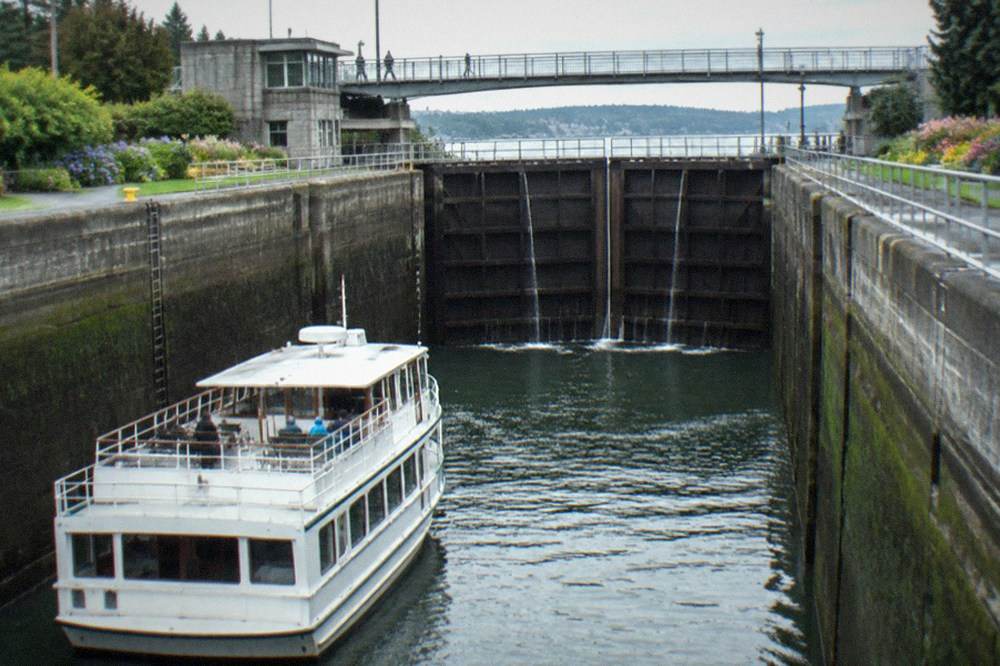
Getting there takes about 20 to 30 minutes from downtown by bus or car, and the visitor who wants the locks without the logistics can take them from the water instead. The Seattle Locks Cruise runs about two hours between the waterfront and Lake Union, passing through the locks themselves, with a 4.8 rating from 452 reviews and a price from $63.28. The listing carries free cancellation, and it shows the badge "Booked 3 times today."
For anyone weighing a self-directed visit against the cruise, the honest split is this: walking the grounds is the cheaper and more flexible option, and it gives more time at the fish ladder, while the cruise adds the canal transit, the floating-homes stretch of Lake Union and the strange sensation of the boat itself rising and falling in the chamber. The dedicated Ballard Locks visitor guide covers parking, hours and the fish seasons in more detail.
An Elliott Bay Harbor Cruise From Pier 55
A harbor cruise is the fourth essential and the easiest boat trip in the city to fit, because it runs one hour from Pier 55, stays inside Elliott Bay, and still delivers the full skyline view, the ferry traffic and the container cranes from the water. The flagship option carries a 4.7 rating from 2,252 reviews, the largest review pool on this site's roster, from $45.7.
The argument for including a boat among the five is simple: Seattle's identity is maritime, and the city reads differently from the water. From the bay, the skyline stacks up against the Olympics, the Washington State ferries cross in front of it every half hour or so, and the scale of the working port becomes obvious in a way it never does from the promenade. One hour is enough to see all of it, which is why this is the tour that fits into the tightest itinerary.
Seattle's Original Guided Harbor Cruise is the pick here for its review depth and its departure point. The listing shows a 4.7 rating across 2,252 reviews, a price from $45.7, and the urgency badge reading "5+ bookings in the past 6 hours," a sign that several travelers have picked this trip already. It departs Pier 55, boards minutes from the aquarium and the market, and runs a full hour of narrated bay circuit. Free cancellation is on the listing, so weather calls can be made late.
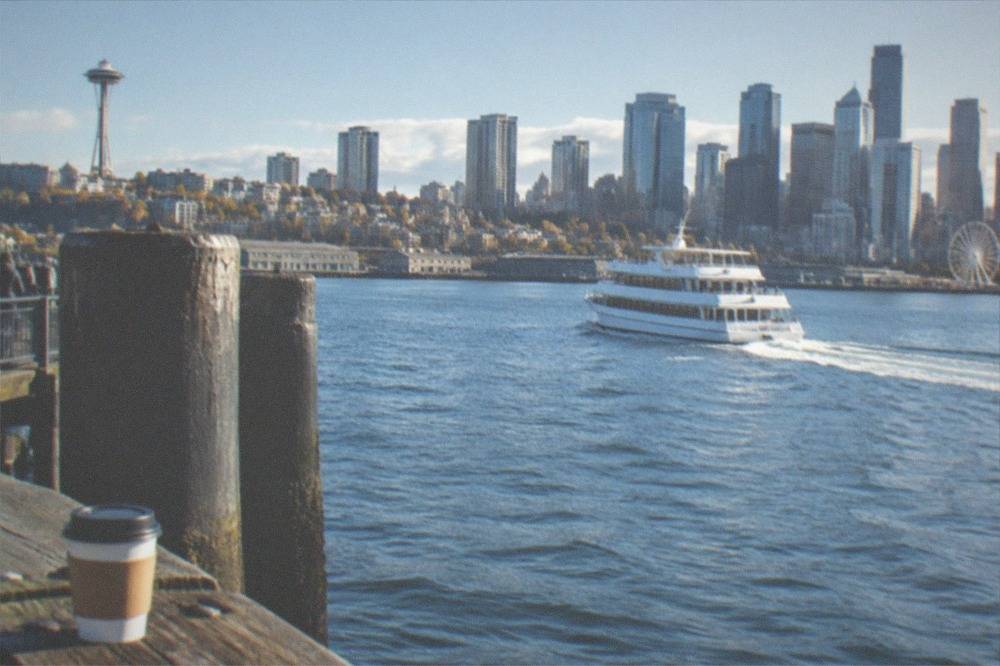
The main alternative runs the same hour from the same pier with a local guide format, a 4.8 rating from 729 reviews and a price from $43 per person. Both are defensible choices; the difference in price is small and the difference in guide style is a matter of taste rather than quality. Travelers who want more than an hour should look at the locks cruise covered above, which adds the ship canal, or the sunset sailing options, which swap midday sightseeing for golden-hour light.
For a fuller comparison of the format options, from one-hour bay circuits to two-hour canal transits, the harbor cruises guide breaks down routes, piers and prices side by side.
Whale Watching From Seattle Into Puget Sound
Whale watching is the fifth essential and the biggest commitment on the list: the main cruise from Seattle runs 3 to 5 hours, carries a 4.5 rating from 653 reviews and costs from $150 per person, and it heads out into Puget Sound and the Salish Sea where orcas, humpbacks, seals and porpoises actually live. No operator can promise a sighting, but the season windows are well understood and the whales are genuinely there.
The honest framing starts with the species. Bigg's, or transient, orcas are present in Puget Sound year-round, and they are now the orcas most often encountered by tours. Southern Resident killer whales are most reliably in the wider Salish Sea roughly April/May through September/October. Humpbacks are most common May through October, and gray whales, including the local Sounders group that feeds on ghost shrimp, pass through mainly February to May. A summer or early-fall trip overlaps the widest set of those windows.
The rules that shape every trip are worth knowing, because they explain why boats keep their distance. Federal and Washington state rules require vessels to stay at least 1,000 yards from Southern Resident killer whales, travel under 7 knots within half a mile of them, and disengage transmissions if the whales surface within 400 yards. For Bigg's and other ecotypes the minimum is 200 yards. The full rules are published by Be Whale Wise, the NOAA Fisheries partner site, and they apply to tour boats and kayakers alike.
The Seattle: Wildlife and Whale Watching Cruise is the roster's main option from the city itself, departing 2701 Alaskan Way, running 3 to 5 hours, rated 4.5 from 653 reviews, from $150 per person, with free cancellation and the listing badge "Likely to sell out." A second half-day listing runs the same route style, rated 4.3 from 390 reviews from $154.97. Both are real options; the review pools are large enough on the first to treat the rating as meaningful.
One planning note: the whale trips are the only item on this list that can be lost to weather, because they cross open water. Free cancellation on the listing makes that a manageable risk, but a visitor with a tight schedule should book whales early in the stay rather than on the last day, so a reschedule is possible. The dedicated Seattle whale watching guide covers species, seasons and the sighting rules in much more depth.
How To Fit All Five Into A Seattle Visit
All five essentials fit comfortably into two full days, and one of them, the harbor cruise, fits into any schedule at all because it runs a single hour from Pier 55. The workable shape is a downtown day pairing the market, the waterfront park and the harbor cruise, then a second day splitting the locks in the morning and the whale cruise, which needs 3 to 5 hours, in the afternoon, or on its own day.
The downtown day needs no vehicle at all. The market, the Overlook Walk, the park, the aquarium, the Great Wheel and Pier 55 are all within a flat ten-minute walk of one another, and the one-hour cruise slots into any gap in the afternoon. On a summer weekday the whole loop can be done before dinner with time left over, though the record cruise season means the piers are busier on ship turnaround days.
The second day takes more logistics. The locks are 20 to 30 minutes from downtown, and the whale cruise departs from 2701 Alaskan Way back on the waterfront, so the clean pattern is locks in the morning, lunch, then the whale trip, which on the water for 3 to 5 hours plus boarding will consume most of an afternoon. Anyone who finds that too much water in one day can swap the locks visit for the two-hour locks cruise on a third day instead, since that tour covers the locks from the canal side.
| Day plan | Morning | Afternoon | Evening |
|---|---|---|---|
| One day only | Pike Place Market, then Overlook Walk | Waterfront Park, aquarium, Great Wheel, one-hour harbor cruise from Pier 55 | Dinner on the waterfront |
| Two days | Day 1: market, Overlook Walk, waterfront park | Day 1: harbor cruise and piers | Day 1: waterfront dinner |
| Two days, part 2 | Day 2: Ballard Locks and fish ladder | Day 2: whale watching cruise, 3 to 5 hours | Day 2: early night after the boat |
| Three days | Add the locks cruise or a sunset sail | Add the second waterfront day at leisure | Add a ferry ride as a bonus |
The bonus that costs almost nothing is the public ferry. Washington State Ferries runs the Seattle to Bainbridge Island crossing from Colman Dock at Pier 52, about 35 minutes each way, with adult round-trip fares collected at the Seattle end and riders 18 and under riding free. It is public transit, not a tour, and this site does not sell it as one, but as a cheap boat ride with skyline views it is hard to beat. Current fares and sailing times are on the official WSDOT schedule page for the route.
Season matters more here than in most cities. Seattle's boating high season runs roughly April/May through October, aligned with longer daylight and the Port of Seattle's cruise season, and many operators reduce or suspend regular public sailings November through March. The locks, by contrast, run year-round and the fish ladder has its best show in late summer and September, when the Chinook and coho peaks overlap. A visitor choosing between, say, a wet February weekend and a dry September one is choosing between a quiet, gray, salmon-free city and a busy one with fish in the windows and whales in the Sound, and the September version is the one the five essentials are built for.
For readers who want the month-by-month detail, the best time of year for a Seattle boat tour guide lays out the seasonal trade-offs, and the piece on what a Seattle boat tour costs covers the full price picture across formats.
For anyone ready to lock in the boat portion of the list, the three tours below cover the one-hour, half-day and two-hour formats that pair with the five essentials above.
Whichever combination fits the itinerary, the pattern that works is to book the boats first and build the land days around them, since the departures are fixed and the market, the park and the locks are not. Seattle Boat Tours keeps the full roster with live prices and free cancellation terms on every listing, so the boat half of the list is the easy half to plan.
Common Questions About Visiting Seattle
What Are The Top 5 Things To Do In Seattle?
The five essentials are Pike Place Market with the Overlook Walk, the rebuilt Waterfront Park with the aquarium and Great Wheel, the Ballard Locks with their fish ladder, a one-hour harbor cruise on Elliott Bay, and a half-day whale watching cruise into Puget Sound. Four of the five sit on or beside the water.
How Many Days Do You Need In Seattle?
Two full days cover all five essentials: one downtown day for the market, the waterfront park and the harbor cruise, and a second day for the Ballard Locks and the whale watching cruise. A third day adds comfort, allowing the locks cruise, a sunset sail or a ferry ride without rushing.
Is Pike Place Market Worth Visiting?
Yes. It is a genuine working market with fishmongers, farm produce and flower stalls rather than a themed shopping mall, and since late 2024 the Overlook Walk connects it directly to the waterfront as an elevated park. Arriving in the first hour after opening avoids the heaviest weekend crowds.
Can You Visit The Ballard Locks Without A Tour?
Yes. The grounds and gardens are open daily from 7 a.m. to 9 p.m. and the fish ladder viewing room until 8:45 p.m., and watching vessels lock through is free from the public walkways. The two-hour locks cruise adds the canal transit and Lake Union, but it is an addition, not a requirement.
What Is The Best Month To Visit Seattle?
For the five essentials, late August through September is the strongest window: the Chinook and coho runs overlap at the locks fish ladder, the whale season windows for Bigg's orcas and humpbacks are still open, and the weather is typically at its driest. The boating high season runs roughly April/May through October.
Do The Boat Trips From Seattle Sell Out?
Some listings carry real urgency badges from their own pages: the flagship harbor cruise shows "5+ bookings in the past 6 hours", the locks cruise shows "Booked 3 times today." and the whale watching cruise shows "Likely to sell out." Booking ahead is sensible in high season, and every listing on the roster carries free cancellation.