What Is The Best Way To See The San Juan Islands?
The San Juan Islands sit about 80 miles northwest of Seattle, and no boat tour on this roster sails there directly. Here is how the trip actually works, what it costs, and the Puget Sound whale-watching alternatives that depart from the city.
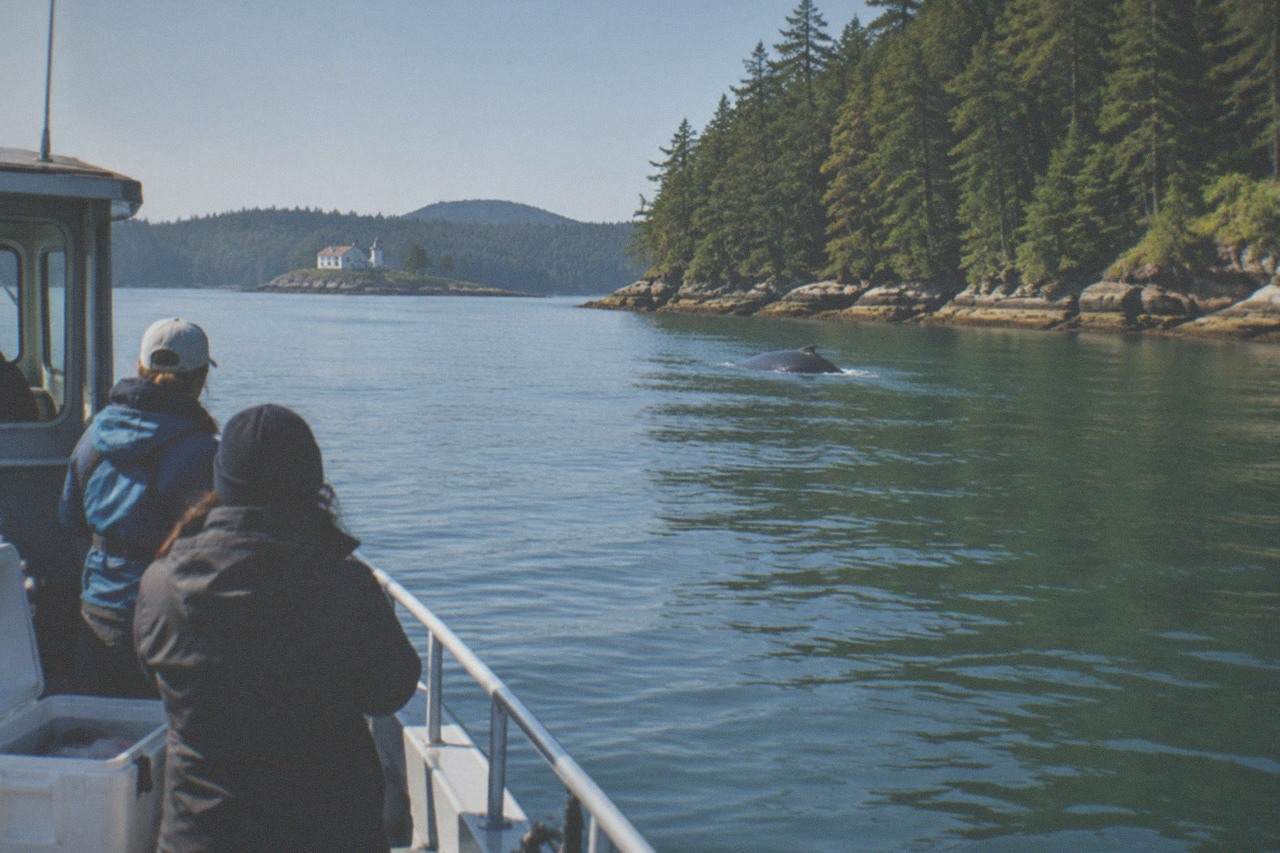
The San Juan Islands sit roughly 80 miles northwest of Seattle, a scattered archipelago of forested islands at the northern edge of Puget Sound where orcas, humpbacks and seals gather around the deep channels between San Juan, Orcas and Lopez islands. They are one of the most famous wildlife destinations in the Pacific Northwest, and one of the most common questions Seattle visitors ask is how to fit them into a trip that is anchored in the city.
The honest starting point is that the San Juans are a separate destination, not a stop on a Seattle harbor cruise. No tour on this site sails from a Seattle pier to Friday Harbor. Getting there means either a long day trip built around a whale-watching excursion, or a drive north to Anacortes and the Washington State Ferries terminal, and the right choice depends on how much of your Seattle trip you are willing to spend on the road. This article lays out both routes with real numbers, then covers the Puget Sound cruises that depart from Seattle itself and reach much of the same wildlife, which for many visitors is the better trade.
What Is The Best Way To See The San Juan Islands?
The best way is a dedicated whale-watching excursion from Anacortes or a ferry-and-explore trip to Friday Harbor, both of which are separate from Seattle's own tour roster. Seattle-based options exist only as Puget Sound wildlife cruises, not San Juans sailings. The tour sold on this site that comes closest is a whale-watching day trip routed through Deception Pass, which is genuinely spectacular but is not a San Juan Islands tour.
There are really three ways to see the islands, and they suit three kinds of traveler.
The first is the day trip. Several whale-watching companies based in Anacortes run 3 to 5 hour excursions into the islands from the mainland terminal town, and a handful of operators run seasonal departures from Seattle itself that drive you north by bus or van before boarding. These trips are built around wildlife: the boats head straight for the orca hot spots, the Salish Sea's deep channels where both Southern Resident and Bigg's transient killer whales hunt, and they spend their time on the water rather than in the towns.
The second is the ferry-and-explore route. Washington State Ferries runs the Anacortes to Friday Harbor crossing, and a walk-on passenger can spend a few hours in Friday Harbor, the islands' main town, without ever needing a car on the islands themselves. This is the slower, cheaper, more independent option, and it pairs well with an overnight stay on San Juan or Orcas Island if you can spare the night.
The third is the honest compromise for visitors who only have time for one long day out of Seattle: a Puget Sound whale-watching cruise that departs from the city's waterfront. These do not reach the San Juans, but the whales do not respect island boundaries either, and the same species move through Puget Sound within reach of a Seattle departure pier.
For a Seattle visitor weighing that third route, three listings on this site cover the wildlife angle. The table later in this article compares them directly, but the short version is that all three are whale-watching cruises on Puget Sound and the Salish Sea, not San Juans tours, and the copy on each listing says so plainly.
Can You See The San Juan Islands On A Day Trip From Seattle?
Yes, but it is a full-day commitment of 10 to 12 hours or more, because the islands are roughly 80 miles northwest of the city and every route involves a drive north or a long boat transit. A realistic day trip means leaving early, spending 3 to 5 hours on the water, and returning to Seattle in the evening. Visitors who want Friday Harbor itself should budget an overnight instead.
The arithmetic is unforgiving. The drive from downtown Seattle to Anacortes runs about 90 minutes to two hours in normal traffic, and the ferry from there to Friday Harbor adds a crossing of about an hour to an hour and a quarter on top of check-in and boarding time. Do that in both directions with a few hours on the island in between, and the day is gone before you have seen anything beyond the harbor.
That is why the day-trip market is dominated by wildlife excursions rather than sightseeing. A whale-watching boat from Anacortes is already positioned at the islands' doorstep, and the operators that run Seattle departures solve the distance problem by putting you on a bus or van first. One listing sold on this site takes exactly that shape: the Whale Watching + Deception Pass Tour from Seattle departs the Sheraton Grand Seattle downtown, runs 10 hours 30 minutes end to end, and is rated 4.8 from 22 reviews with prices from $368 per person and free cancellation on the listing. The listing carries a real "Booked 2 times today" badge.
It is worth being precise about what that tour is, because the name invites confusion. It is a whale-watching cruise with a Deception Pass routing, not a San Juan Islands tour. Deception Pass is the dramatic channel between Whidbey and Fidalgo islands, south and east of the San Juans proper, with a bridge above and strong tidal currents below. It is some of the most photographed water in Washington State, and the tour's routing passes through it, but the boat is not calling at Friday Harbor and the itinerary should be read as wildlife plus scenery, not islands sightseeing.
For visitors who want the islands themselves rather than the whales, the better plan is to treat the San Juans as an overnight. The Friday Harbor ferry accepts walk-on passengers, the town is compact and walkable, and an overnight on San Juan Island turns a rushed day into a relaxed one. The public ferry is transit, not a tour, and it is never sold as one on this site; the official state ferry schedule is the place to confirm current sailing times.
| Route | Time from Seattle | What you get | Best for |
|---|---|---|---|
| Whale excursion from Anacortes | About 2 hours driving each way, plus 3 to 5 hours on the water | Wildlife-focused boat time in the islands' core waters | Whale watchers with a car |
| Seattle-departed wildlife day trip | 10 to 12 hours door to door, transport included | Whale watching plus Deception Pass scenery, no driving | Visitors without a car who accept the long day |
| Ferry to Friday Harbor, walk-on | About 2 hours driving plus ferry crossings | The islands' main town, shops and shoreline at your own pace | Independent travelers, best overnight |
| Seattle-based Puget Sound cruise | 3 to 5 hours from a downtown pier | Salish Sea wildlife without leaving the city | Short itineraries, families, limited time |
What Wildlife Can You Actually See Around The San Juan Islands?
The islands' signature species are orcas, both the endangered Southern Residents and the more numerous Bigg's transients, plus humpback whales, gray whales in spring, harbor seals, Steller sea lions, porpoises and bald eagles. Sightings are never guaranteed in any month, but the season windows are well documented: Bigg's orcas are present year-round, humpbacks are most common May through October, and gray whales pass through February to May.
The San Juans sit at the confluence of several whale populations, which is exactly why the whale-watching industry clusters there. Bigg's, or transient, killer whales hunt seals and porpoises throughout the Salish Sea and have increased their presence in inland waters steadily over recent decades; a University of Washington analysis of decades of sighting data published in 2026 confirmed how at home several matrilines now are in Puget Sound itself, not just the islands. Southern Resident killer whales, the salmon-eating endangered population, are most reliably in the wider Salish Sea roughly April or May through September or October, and the provisional July 2026 census counted 76 of them, up two from the July 2025 count.
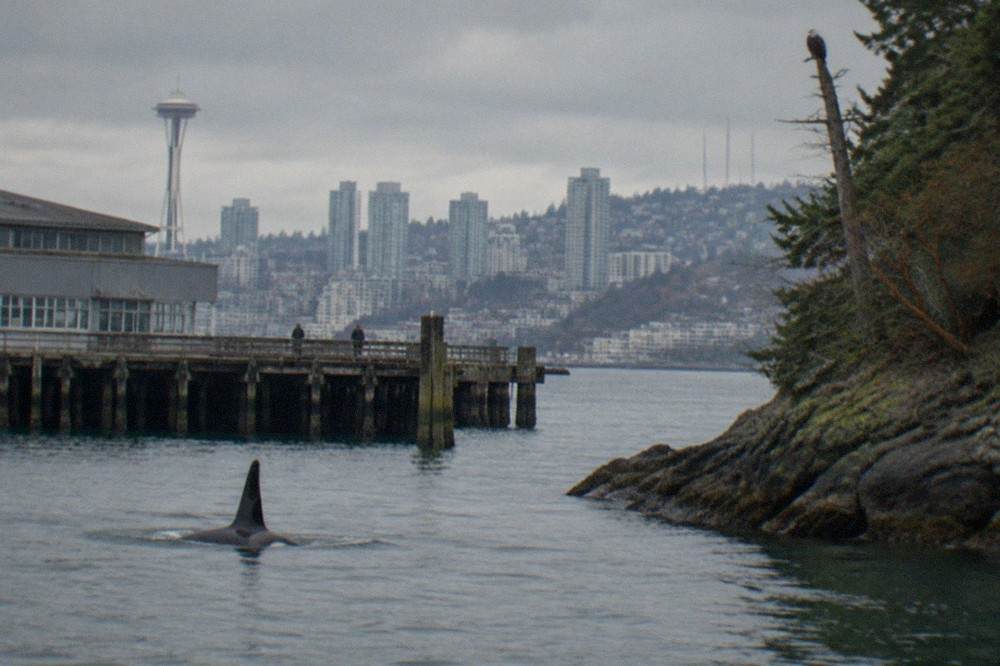
Because Southern Residents are federally protected and struggling, the rules around them are strict, and any boat you board follows them. Vessels must stay at least 1,000 yards from Southern Resident killer whales, travel under 7 knots within half a mile of them, and disengage their engines if the whales surface within 400 yards, per Washington State law. Other orca ecotypes like Bigg's whales carry a 200 yard minimum. The full rules live at bewhalewise.org, the NOAA Fisheries partner site.
None of this is a sighting promise. A good operator frames every trip as a chance, not a certainty, and the season windows above are typical patterns drawn from sighting data, not a schedule the whales keep. What the islands reliably deliver, even on a quiet whale day, is the setting: the channels, the eagles, the seal haul-outs and the mountains rising on the horizon in three directions.
How Does Deception Pass Compare To The San Juans?
Deception Pass is a narrower, faster, more dramatic channel than anything in the San Juans, with tidal currents that rip through a bridge-spanned gap between Whidbey and Fidalgo islands, but it is a single passage rather than an archipelago to explore. As a day trip from Seattle it costs far less time than the San Juans while still delivering strong wildlife odds, which is why the combined tour exists.
The pass is about 60 miles north of Seattle by road, meaningfully closer than Anacortes, and its personality is entirely different. Where the San Juans are wide water and scattered islands, Deception Pass is a slot: a channel a few hundred yards wide where the tide can push several knots, swirling in whirlpools visible from the bridge deck above. Boats time their transits to the slack tide, and a tour that threads the pass gets scenery the islands cannot match, a canyon of water rather than an open sea. More of these guides are collected on Seattle Boat Tours.
The wildlife trade-off runs the other way. The San Juans' deep channels are the region's orca core, and a boat based there spends its whole trip inside prime habitat. A Deception Pass routing from Seattle passes through excellent Salish Sea water on the way, with real whale odds, but the itinerary splits its day between wildlife and the pass itself. The combined tour from the Sheraton Grand Seattle, rated 4.8 from 22 reviews and priced from $368 per person, is honest about this shape: it sells the pairing, not a San Juans day.
For visitors who want the pure wildlife version without the long drive logistics, two Seattle-based listings cover it. The Seattle: Wildlife and Whale Watching Cruise departs 2701 Alaskan Way, runs 3 to 5 hours, and is rated 4.5 from 653 reviews with prices from $150 per person and free cancellation on the listing. Its listing carries a "Likely to sell out" badge. The half-day variant, the Seattle: Half-Day Wildlife and Whale Watching Cruise from the same pier, runs the same 3 to 5 hour window, is rated 4.3 from 390 reviews, from $154.97, and shows "Booked 3 times today" on its listing. Neither one goes near the San Juans; both fish the same Salish Sea.
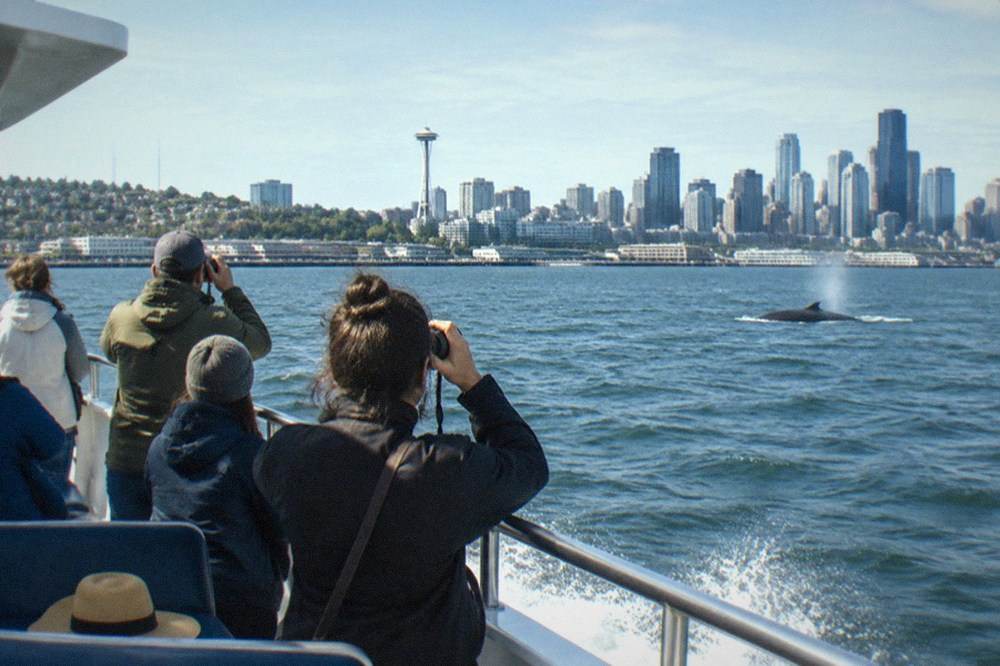
The comparison is really about what a day is worth. If seeing an orca is the single goal and the schedule allows, the Anacortes or islands-based excursion is the specialist tool. If the day also needs to include scenery, or the group would rather not commit 12 hours, the Deception Pass pairing or a straight Seattle wildlife cruise buys most of the experience at half the calendar cost.
What Does A San Juan Islands Trip Cost Compared To A Seattle Boat Tour?
A San Juans day trip from Seattle runs roughly $368 per person for the combined whale-watching and Deception Pass tour on this roster, while the Seattle-based wildlife cruises cost from $150 and from $154.97, and the public ferry to Friday Harbor charges walk-on passenger fares measured in tens of dollars. The gap is the price of the distance: the farther the boat operates from the city, the more the day costs.
The ferry is the budget option by a wide margin, and it is worth repeating that it is public transit, not a tour. A walk-on round trip from Anacortes to Friday Harbor costs a modest fare, with youth 18 and under riding free, and the crossing itself delivers genuine island scenery from the outer decks. What it does not deliver is wildlife focus, narration or a boat that detours toward whales. It runs a fixed route on a fixed schedule.
| Option | Departure point | Duration | Price on this roster | Rating and reviews |
|---|---|---|---|---|
| Whale Watching + Deception Pass Tour | Sheraton Grand Seattle | 10 hours 30 minutes | From $368 per person | 4.8 from 22 reviews |
| Seattle: Wildlife and Whale Watching Cruise | 2701 Alaskan Way | 3 to 5 hours | From $150 per person | 4.5 from 653 reviews |
| Half-Day Wildlife and Whale Watching Cruise | 2701 Alaskan Wy | 3 to 5 hours | From $154.97 | 4.3 from 390 reviews |
| Public ferry to Friday Harbor | Anacortes terminal | Crossing about 1 hour to 1 hour 15 minutes | Walk-on passenger fare, youth 18 and under free | Not a tour product |
Read the middle two rows carefully, because they look almost identical and differ in one useful way. Both Seattle cruises run 3 to 5 hours from the same pier, and their prices are within a few dollars of each other. The difference is the review pool: 653 reviews against 390, a 4.5 against a 4.3, and the older listing's larger sample gives its average more weight. A visitor choosing between them is choosing between two versions of the same idea, and the listings' own details, boat type and departure times, are the tiebreaker.
Every listing above carries free cancellation on the listing, which matters for a weather-dependent activity booked ahead of a trip. Whale watching in the Pacific Northwest runs rain or shine, and the boats have indoor salons, but a visitor with a tight itinerary should still check the departure terms before committing a full day.
When Is The Best Month To Visit The San Juan Islands?
The best months are May through September, when whale abundance, daylight and ferry frequency all peak together: humpbacks are most common May to October, Bigg's orcas are present year-round, and summer brings the longest days and the fullest schedules. April, May and the September to October shoulder are quieter with good odds, while November through March means reduced ferry service and slimmer wildlife windows.
The season aligns with Seattle's own boating calendar, which runs roughly April or May through October, and with the whale data from the sighting networks. Gray whales lead the year, showing up February through May as the Sounders group detours into Puget Sound to feed on ghost shrimp. The humpback build through summer and often peak in surface activity in late summer. The Southern Residents are most reliably in the region roughly April or May through September or October, and the Bigg's transients, the population that has genuinely grown in recent years, are the year-round constant.
Daylight matters more than visitors expect. In June the islands get roughly 16 hours of it, and a 3 to 5 hour excursion fits comfortably either side of a ferry crossing. By late October the light shortens, the weather turns, and the summer ferry schedule gives way to the reduced fall and winter timetables. A shoulder-season trip in May or September trades crowds for a small weather risk, and many regulars consider that the better deal.
For a Seattle visitor deciding between months, the planning logic is the same as for the city's own tours, covered in detail in the seasonal guide to Seattle boat tours. If the trip is anchored in Seattle and the San Juans are a maybe, the honest advice is to book the city's whale-watching cruise for the heart of your visit, and to read more in is whale watching in Seattle worth it before committing to the longer day. The full wildlife options are laid out in the Seattle whale-watching tours guide.
Common Questions About The San Juan Islands
What Is The Best Way To See The San Juan Islands?
Either a dedicated whale-watching excursion from Anacortes, which puts you inside the islands' core orca waters for 3 to 5 hours, or a walk-on ferry to Friday Harbor if you want the town itself. From Seattle without a car, the closest thing on this roster is the Whale Watching + Deception Pass Tour, a 10 hour 30 minute day trip from the Sheraton Grand Seattle, which is a wildlife cruise with Deception Pass scenery, not a San Juans tour.
Can You Get To The San Juan Islands From Seattle Without A Car?
Yes, but it takes commitment. The Seattle-departed whale-watching day trips include the transport in the itinerary, and the public Washington State Ferry from Anacortes accepts walk-on passengers, but reaching Anacortes itself from Seattle without a car means a scheduled bus connection of roughly two hours each way. An overnight on the islands makes the logistics far easier than a same-day round trip.
Are The San Juan Islands And Deception Pass The Same Place?
No. Deception Pass is the channel between Whidbey and Fidalgo islands, south and east of the San Juans, famous for its bridge and its tidal currents. The San Juan Islands are the archipelago around San Juan, Orcas and Lopez islands, farther northwest. The combined tour from Seattle routes through Deception Pass and Salish Sea whale waters, and its listing does not claim Friday Harbor.
Will You Definitely See Orcas On A San Juan Islands Trip?
No trip can promise a sighting, and no listing on this site does. Bigg's transient orcas are present in the region year-round, Southern Residents are most reliably seen roughly April or May through September or October, humpbacks are most common May through October, and gray whales pass through February to May. These are season windows, not guarantees, and operators frame every trip as a chance.
How Close Can A Boat Get To The Whales?
Washington law requires vessels to stay at least 1,000 yards from Southern Resident killer whales, travel under 7 knots within half a mile of them, and disengage engines if the whales surface within 400 yards. Other orca ecotypes, including Bigg's transients, carry a 200 yard minimum. Commercial whale-watching boats follow these rules, and the distance is enforced by state and federal law.
Is A Seattle Whale-Watching Cruise A Good Substitute For The San Juans?
For many visitors, yes. The Seattle-based cruises on this roster run 3 to 5 hours from the downtown waterfront, from $150 per person and from $154.97, and fish the same Salish Sea that surrounds the islands. They skip the islands' towns and the full archipelago scenery, but they deliver the wildlife experience at a fraction of the time cost. A visitor with a free day and a car may still prefer the Anacortes excursion.