What Is There To Do At The Ballard Locks?
The Ballard Locks combine vessel transits, a salmon fish ladder with summer viewing windows, botanical gardens, and boat cruises that pass through the locks themselves. Here is what to see and how to plan the visit.
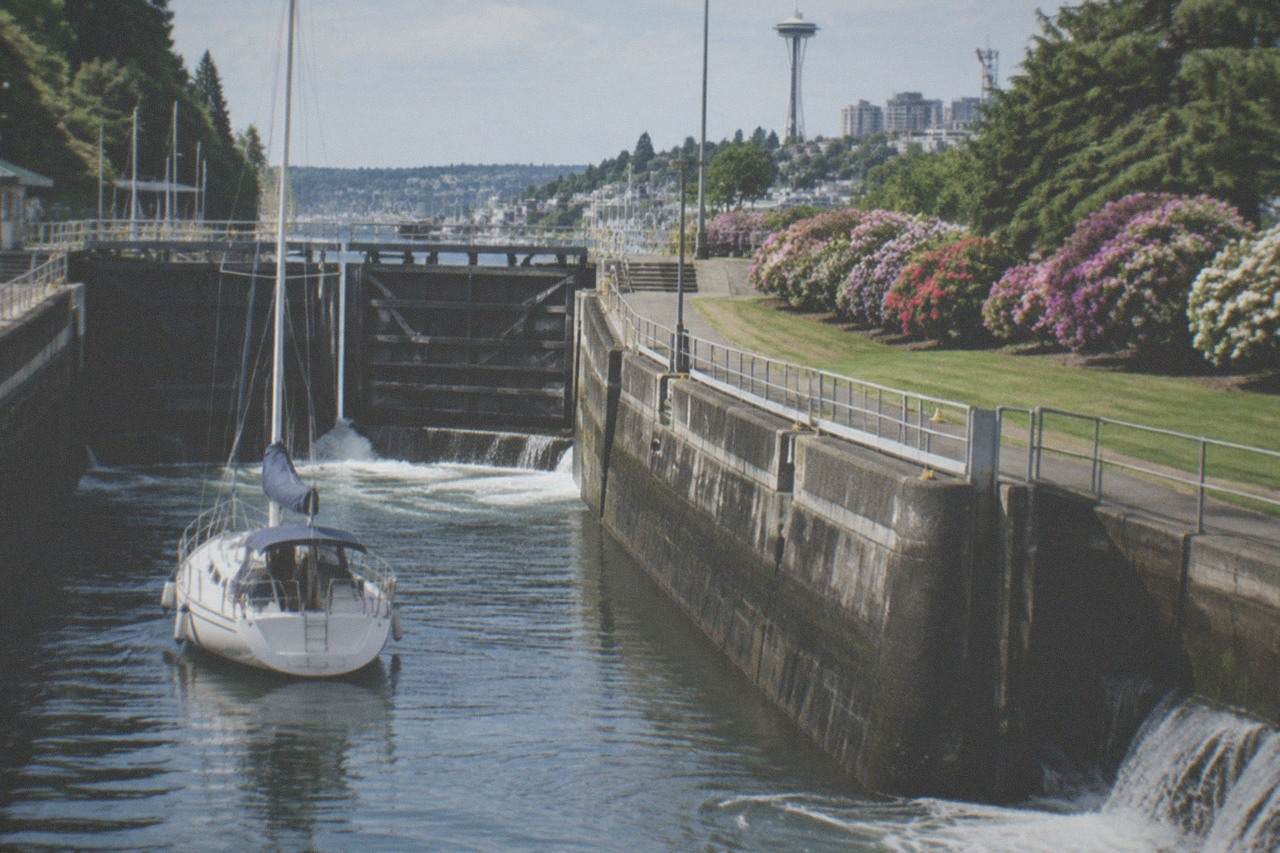
What Is There To Do At The Ballard Locks?
The Ballard Locks combine four activities in one spot: watching boats rise and fall between salt and fresh water, viewing migrating salmon through the underwater fish ladder window, walking the gardens on the grounds, and riding a cruise boat that locks through the chamber itself. Most visitors fill two to three hours, and longer in late summer when the Chinook run peaks.
The site's full name is the Hiram M. Chittenden Locks, and it has done the same job since it formally opened on July 4, 1917, with the first vessel actually passing through on August 3, 1916. The US Army Corps of Engineers, Seattle District, runs the complex, which lifts and lowers roughly 40,000 to 50,000 commercial and recreational vessels a year between Puget Sound and the Lake Washington Ship Canal. That volume places it among the busiest lock operations in the country, and it is the reason the grounds rarely go quiet: on a summer afternoon, boat traffic moves through almost continuously.
What surprises many first-time visitors is how much of the operation is visible. You can stand a few feet from the chamber gates, watch the water level drop, and listen to the lock tenders direct traffic by radio. The fish ladder sits beside the small lock with a glass-walled underwater viewing room, the gardens wrap the south and west sides of the complex, and the whole thing sits in the middle of Ballard, one of the city's most walkable neighborhoods. There is a reason the question whether the locks are worth visiting comes up so often: the answer depends less on the locks alone and more on how you combine the pieces.
The one thing you cannot do from shore is feel the lock work under you. That is what the cruise option adds: two listings on this site run the locks as part of their route, and both put passengers inside the chamber as it fills or drains. If that on-water version appeals, these are the three listings worth comparing first.
Between them, those three cover the two locks cruises and the closest harbor alternative, and the sections below break down what each part of a locks visit actually looks like. The short version: come for the boats, stay for the salmon, and use the gardens as the pause between the two. Late August through September is when the site is at its most alive, because the vessel traffic and the fish runs overlap.
Watching Vessels Lock Through Between Puget Sound And Lake Union
Vessels enter one of two lock chambers, the gates close, and the water level rises or falls up to about 26 feet between Puget Sound and the ship canal, with the exact difference varying by tide. The large lock handles most traffic, the small lock takes smaller boats, and visitors can watch every transit from the grounds along the chamber walls.
The mechanics are simple once you see them once. A boat enters the chamber, the downstream gate swings or drops shut, and valves either flood the chamber to lift the boat or drain it to lower the boat, until the water matches the level on the other side. Then the upstream gate opens and the boat continues. For a saltwater vessel heading to Lake Union, that means climbing about 26 feet at high tide, and often less at low tide, since the elevation difference shifts with the tide on the Puget Sound side.
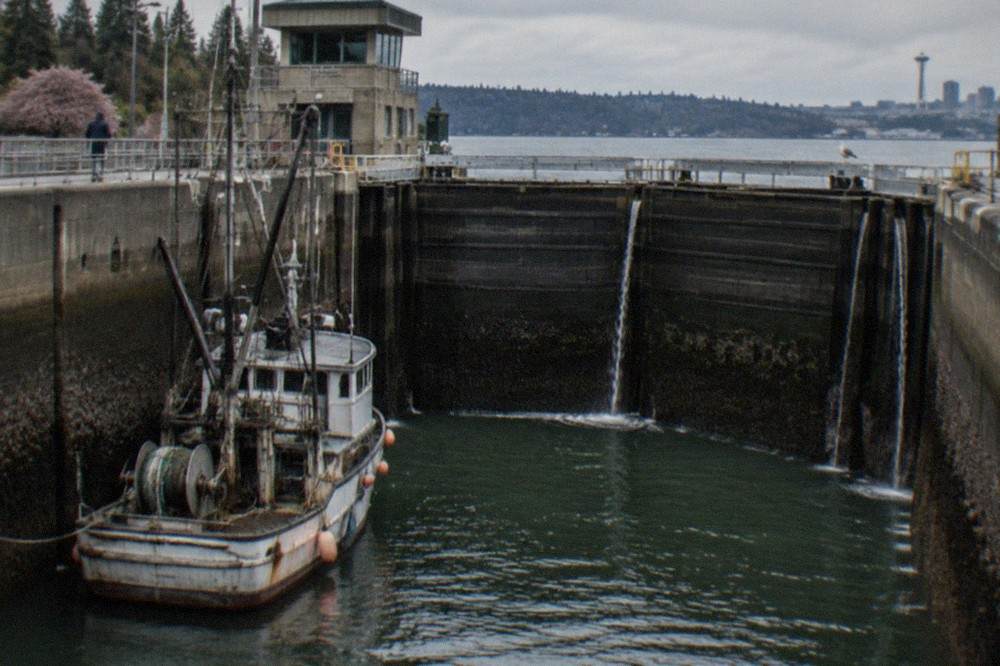
The two chambers split the work. The large lock, 80 feet wide by 825 feet long, takes everything from tugs and fishing fleets to tall-masted sailboats, and it can pass several vessels in a single locking. The small lock, 30 feet wide by 150 feet long, handles the kayaks, small runabouts, and day cruisers that make up much of the summer traffic, and it cycles much faster because it moves less water. Watching the lock tenders sort a queue of a dozen boats by size and direction, then slot them into the right chamber, is half the show.
| Feature | Detail |
|---|---|
| Formal opening | July 4, 1917 (first vessel passage August 3, 1916) |
| Large lock | 80 ft wide by 825 ft long |
| Small lock | 30 ft wide by 150 ft long |
| Elevation change | Up to about 26 ft, varying with tide |
| Annual vessel transits | Roughly 40,000 to 50,000 |
| Operator | US Army Corps of Engineers, Seattle District |
Timing matters if the transits are your main interest. Weekends in July and August bring the heaviest recreational traffic, and mid-afternoon tends to be the busiest window on the water. On a quiet weekday morning you may wait longer between lockages, but you will see them with fewer people at the railing. Either way, the chambers run continuously: vessel lockage operates around the clock, every day of the year, which is why the grounds themselves keep long hours.
If watching from the railing makes you want to be on the boat instead, the locks cruise listings run roughly two hours and pass through the chamber as part of the route. The listing for the Seattle: Locks Cruise with Local Guide carries free cancellation, so a change of weather or plan does not strand the booking.
That cruise runs one way between Elliott Bay and Lake Union, which means the lock transit is the centerpiece rather than a detour. From the deck of the boat, the 26-foot climb or descent takes on a different character entirely: the walls slide past at eye level, the water pours through the valves with real force, and the whole cycle takes long enough that you get your bearings in the chamber before the far gate opens.
The Fish Ladder And When Salmon Pass The Ballard Locks
A fish ladder beside the small lock lets migrating salmon and steelhead climb past the barrier, and a glass-walled underwater viewing room lets visitors watch them swim past. Chinook pass primarily July through November with the peak in the last two weeks of August, and coho pass August through November with the peak in the last two weeks of September.
The fish ladder exists because the locks are also a dam: salmon returning from the ocean to spawn in the Cedar River watershed need a way past the concrete. The ladder is a series of stepped pools, each slightly higher than the last, and the fish jump from pool to pool until they reach the freshwater side. The viewing room sits at the critical point, with thick glass looking into one of the final pools, so on a good day in late summer the window fills with chrome-bright Chinook holding position in the current.
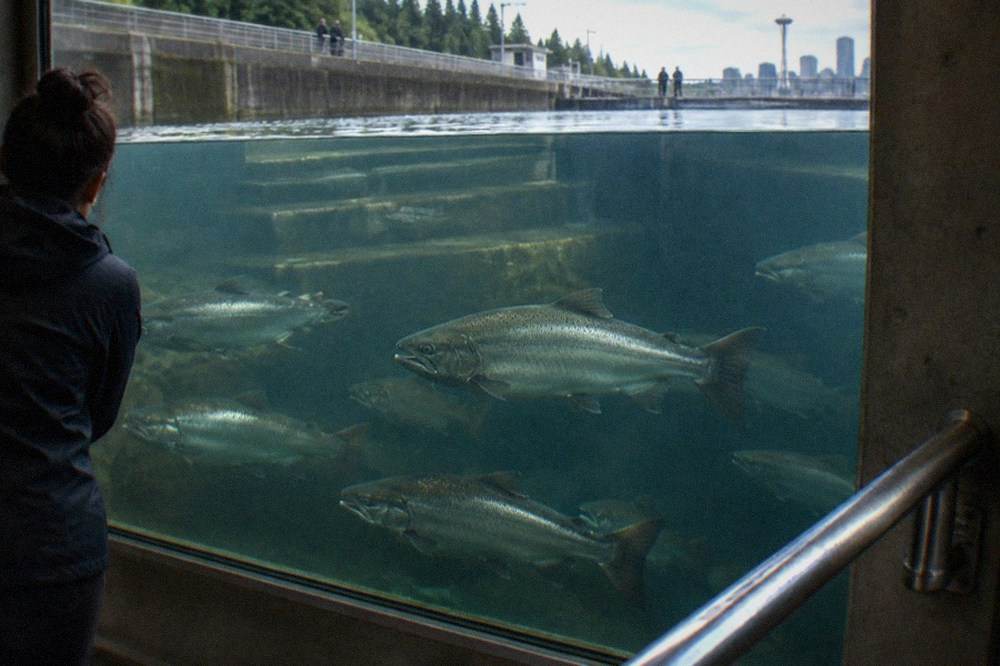
The season shapes the whole experience. Chinook are the main event, counted primarily from July through November and peaking in the last two weeks of August, when thousands pass in a single week. Coho follow from August through November, peaking in the last two weeks of September, and they tend to run smaller and fight the current harder, which makes them lively at the window. Sockeye also use the ladder in serious numbers even though the season tables focus on Chinook and coho: the 2026 sockeye season total at the locks reached 31,302 fish. The US Army Corps tracks the counts on its fish counts page, and its fish ladder page lays out the viewing seasons in the same terms.
| Species | Primarily passing | Peak weeks | 2026 season total |
|---|---|---|---|
| Chinook | July to November | Last two weeks of August | 13,771 |
| Coho | August to November | Last two weeks of September | 6,700 |
The 2026 Chinook run told an interesting story. Counts ran below the 2023 and 2024 totals at similar points in the season, but the late-summer portion came in strong, including a single week in mid-August with 2,555 Chinook counted. By the week ending September 13, the weekly Chinook count stood at 1,978 and the season total at 13,771, with coho building toward their own late-September peak at 5,088 for that week. In practical terms: if you can only visit once, aim for the last two weeks of August for Chinook, or the last two weeks of September for coho, and go in the morning when the viewing room is quietest.
One caution worth passing on: the fish ladder viewing area closed briefly in June 2026 for concrete repairs and reopened the next day, a reminder that a small closure can interrupt a planned visit. The grounds themselves stayed open throughout. Checking the Army Corps site before a salmon-focused trip costs nothing and avoids a wasted trip.
The Gardens And Grounds Around The Locks
The grounds and gardens are open daily from 7 a.m. to 9 p.m., and the fish ladder viewing room stays open until 8:45 p.m. The gardens that wrap the lock complex give the site its park feel, with lawns, mature trees, and walking paths that make the wait between vessel transits pleasant rather than dead time.
Many visitors arrive expecting an industrial site and find a park instead. The gardens sit on the berm above the lock walls, and they do real work in the visit's rhythm: a locking cycle can take twenty minutes from gate to gate, and rather than standing at the railing the whole time, most people drift through the paths and come back when the next boat noses into the chamber. The plantings lean heavily on Northwest natives, and the layout means you are never more than a minute's walk from the action on the water.
The grounds also connect to the wider neighborhood. The locks sit at the west end of the Ballard business district, so a visit pairs naturally with lunch or a brewery stop a short walk away, which is part of why Ballard gets described as one of the nicer parts of Seattle to wander. And for visitors who want to keep to the water, the question of walking across the Ballard Locks comes up often, because the complex doubles as a pedestrian link between the north and south sides of the ship canal.
Hours are generous and simple: the grounds open at 7 a.m. and close at 9 p.m. every day, with the fish ladder viewing room open from 7 a.m. to 8:45 p.m. The visitor center keeps seasonal hours, longer from May through September and reduced from October through April, so it is worth a check if exhibits matter to your group. Early evening is an underrated slot: the summer transits keep coming, the gardens cool off, and the light across the canal is at its best.
Seeing The Locks From The Water On A Locks Cruise
Two cruise listings run the locks as part of their route: the Seattle Locks Cruise and the Seattle: Locks Cruise with Local Guide, both about two hours and both rated 4.8 from their review pools. From shore you watch the mechanics; from the water you sit in the chamber as it drains or fills around the boat, which is the difference.
The two locks cruises cover the same basic territory in different wrappers. The Seattle Locks Cruise, rated 4.8 from 452 reviews, runs about two hours and departs from Pier 54 on the waterfront or AGC Marina on Lake Union, from $63.28, and its listing carries a real-time note reading "Booked 3 times today." The Seattle: Locks Cruise with Local Guide, rated 4.8 from 94 reviews, runs two hours from Pier 54 or the AGC Marina on Lake Union, from $56 per person, with free cancellation on the listing. Both routes connect Elliott Bay and Lake Union through the ship canal, so the lock transit, the fish ladder exterior, and the floating homes of Lake Union's east side all appear on a single trip.
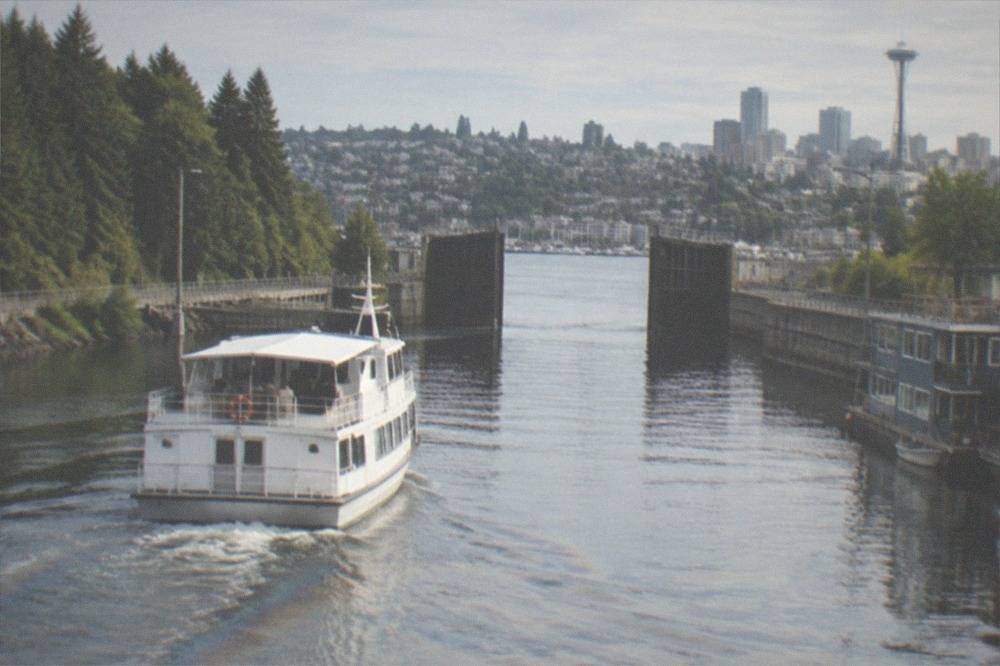
The local-guide version earns its name in the narration. A two-hour run passes the same ground as the standard cruise, but the smaller review pool reflects a newer listing rather than a weaker one, and the format leans on a guide who can answer questions about the locks, the canal's history, and the neighborhoods on both banks. For a first visit, the choice mostly comes down to departure point and price. departure point and price: if you are staying downtown, the Pier 54 departures save the cross-town trip, and if your day is already centered on Lake Union, the AGC Marina boarding is the easier fit.
| Cruise | Duration | Price | Rating | Departure points |
|---|---|---|---|---|
| Seattle Locks Cruise | About 2 hours | From $63.28 | 4.8 from 452 reviews | Pier 54 or AGC Marina |
| Locks Cruise with Local Guide | 2 hours | From $56 per person | 4.8 from 94 reviews | Pier 54/Waterfront or AGC Marina/Lake Union |
| Original Guided Harbor Cruise | 1 hour | From $45.7 | 4.7 from 2252 reviews | Pier 55 |
The third row in that table is the harbor cruise, included because some visitors want the water but not the two-hour commitment. Seattle's Original Guided Harbor Cruise runs one hour from Pier 55, from $45.7, rated 4.7 from 2252 reviews, and it stays on Elliott Bay rather than entering the canal. It does not pass through the locks, so choose it for skyline and harbor views rather than the lock experience. The full breakdown of routes and operators lives in the locks boat tour guide, and the wider on-water comparison across the city is covered across Seattle Boat Tours more broadly.
One practical note for cruise riders: the locks cruises run one way, so you either return by land or ride the reverse departure. Building the day as a loop, one direction by boat and the other on foot through Ballard, is the pattern that works best, and it turns the two-hour cruise into a half-day neighborhood itinerary.
Planning Your Visit: Hours, Closures, And Combining The Day
Grounds hours run 7 a.m. to 9 p.m. daily, with fish ladder viewing until 8:45 p.m., and the site is busiest on summer weekends and during the late-August Chinook peak. Two maintenance windows affect the schedule: the large lock closes November 2 to 20, 2026, and the small lock closes December 7, 2026 through January 18, 2027.
The seasonal rhythm of the whole site follows the salmon and the weather. April through October is the high season for Seattle's on-water options generally, and the locks see their heaviest combined traffic, boats and people both, from July through September. Outside that window the grounds stay open year-round and the lockages never stop, but the cruise schedules thin out, and the fish ladder quiets down between the coho tail in November and the first steelhead and early salmon of the new year.
The maintenance closures matter mainly to boaters, but they matter to visitors too, because a November trip may watch all traffic funneled through one small chamber. The Army Corps publishes the closure calendar on its closures page, and it is the authoritative check before any shoulder-season visit. For cruise passengers, the locks cruise listings follow the general Seattle seasonal pattern, so confirm the departure calendar on the live listing for the date you have in mind.
Combining the day is where the visit earns its time. The classic sequence is the gardens first, then a long stretch at the railing while a locking cycle runs, then the fish ladder room, then the reverse, and the whole loop fits inside three unhurried hours. If the locks cruise is running on your date, flip it: ride the boat through the chamber in the morning, then spend the afternoon on the grounds watching everyone else do it. Visitors who want more water after that sometimes add the one-hour harbor cruise from Pier 55, whose listing notes "5+ bookings in the past 6 hours" as a live signal; it makes a light evening add-on that stays on Elliott Bay.
Whatever the mix, the locks reward the unhurried version of the visit. The transit you watch at 2 p.m. looks identical to the one at 6 p.m., but the salmon window does not, and neither does the light. Plan around the fish if the fish are the point, plan around the boat traffic if the engineering is the point, and let the gardens absorb the waiting either way. If the on-water version is calling, these are the three listings that fit the day best.
Common Questions About The Ballard Locks
What Is There To Do At The Ballard Locks?
Four things: watch vessels lock through between Puget Sound and the ship canal, view migrating salmon at the fish ladder's underwater window, walk the gardens on the grounds, and optionally ride a two-hour cruise that passes through the lock chamber itself. Most visits run two to three hours, longer when the salmon runs peak in late summer.
When Can You See Salmon At The Fish Ladder?
Chinook pass primarily July through November, peaking in the last two weeks of August, and coho pass August through November, peaking in the last two weeks of September. Sockeye use the ladder in large numbers too, with a 2026 season total of 31,302 fish. The viewing room is open daily from 7 a.m. to 8:45 p.m.
Can You Take A Boat Tour Through The Locks?
Yes. Two listings run the locks as part of their route: the Seattle Locks Cruise, about two hours from $63.28, rated 4.8 from 452 reviews, and the Seattle: Locks Cruise with Local Guide, two hours from $56 per person, rated 4.8 from 94 reviews. Both connect Elliott Bay and Lake Union, and both carry free cancellation on the listing.
What Time Do The Grounds Open?
The grounds and gardens are open daily from 7 a.m. to 9 p.m., and the fish ladder viewing room is open from 7 a.m. to 8:45 p.m. The visitor center keeps seasonal hours, longer from May through September and reduced from October through April, so check ahead if the exhibits matter to your group.
When Are The Locks Closed For Maintenance?
Two windows affect the current schedule: the large lock closes November 2 to 20, 2026, and the small lock closes December 7, 2026 through January 18, 2027. During the large lock closure the small lock keeps passing suitable vessels, so lockages continue, but all traffic funnels through the smaller chamber.