Puget Sound Ferry Vs Tour Boat: Which Ride Fits Your Seattle Visit
The public ferry across Puget Sound is one of the cheapest sightseeing rides in the country, and it is not a tour. Knowing where the crossing ends and a narrated cruise begins decides whether you spend eleven dollars or eighty, and whether you get commentary or just a deck.
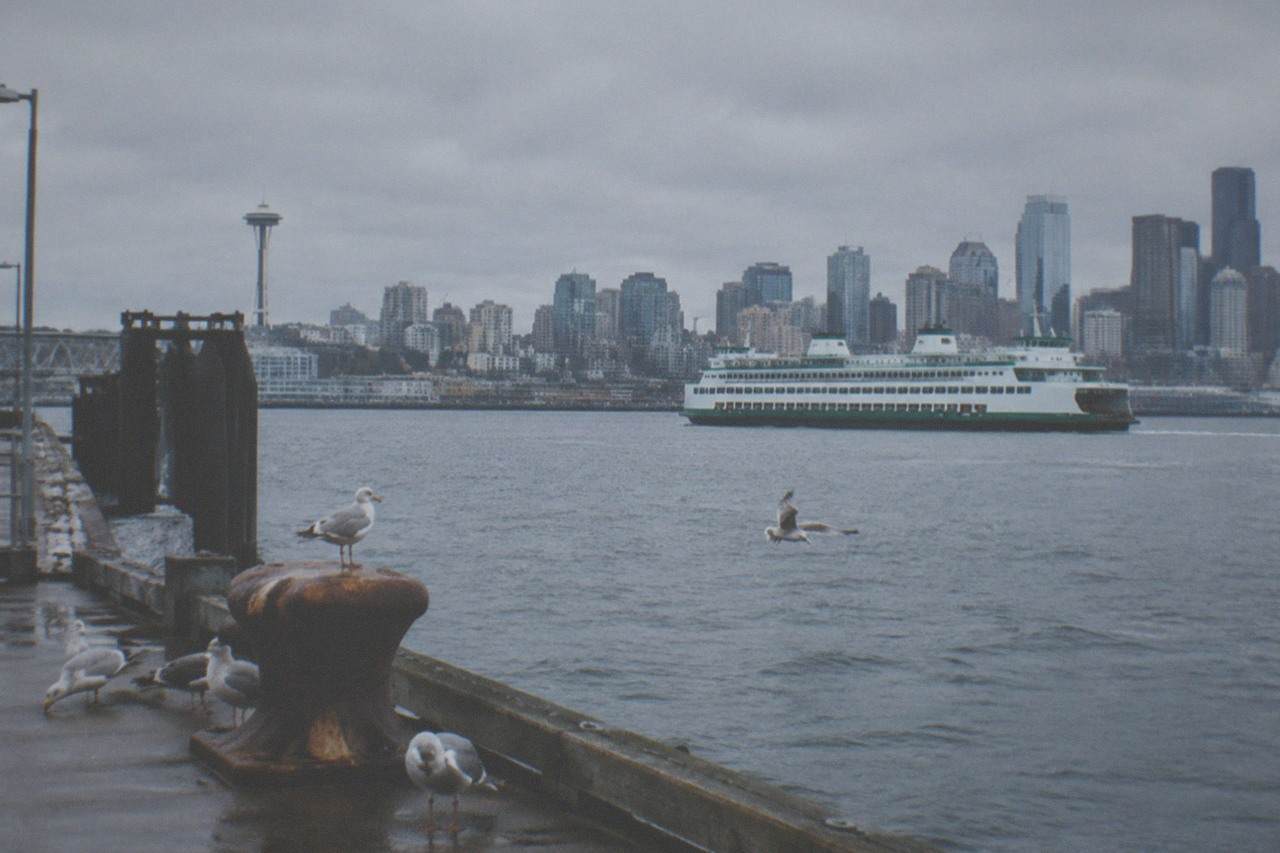
Short answer
The Seattle-Bainbridge ferry is a 35-minute public crossing from Colman Dock at Pier 52, with an adult round-trip fare of $11.35 and no narration, no stops and no guide. A narrated cruise from the central waterfront runs from about $45.70 for a one-hour harbor loop, with guided commentary and a round trip built in. They are different products for different plans.
The Seattle-Bainbridge ferry is a working commuter route that happens to cross some of the best scenery in Washington State, and that combination makes it the most misunderstood ride on the waterfront. Visitors ask whether they can "take the ferry tour" to Bainbridge Island, and the honest answer is that no such product exists: the crossing is public transit, run by Washington State Ferries, carrying residents to work alongside tourists with cameras. It costs a fraction of any cruise on this site, and it delivers a fraction of what a cruise delivers. This page lays the two rides side by side, fare by fare, route by route, so you can decide which one your day actually needs, or whether the smart move is to use both.
What Is The Difference Between The Puget Sound Ferry And A Tour Boat?
The ferry is a scheduled public crossing operated by Washington State Ferries, carrying passengers and vehicles between Colman Dock at Pier 52 and Bainbridge Island in about 35 minutes, with no narration, no route choices and no stops. A tour boat is a privately operated cruise, departing from commercial piers on the central waterfront, running a looped scenic route with a guide providing commentary throughout and returning you to your starting pier.
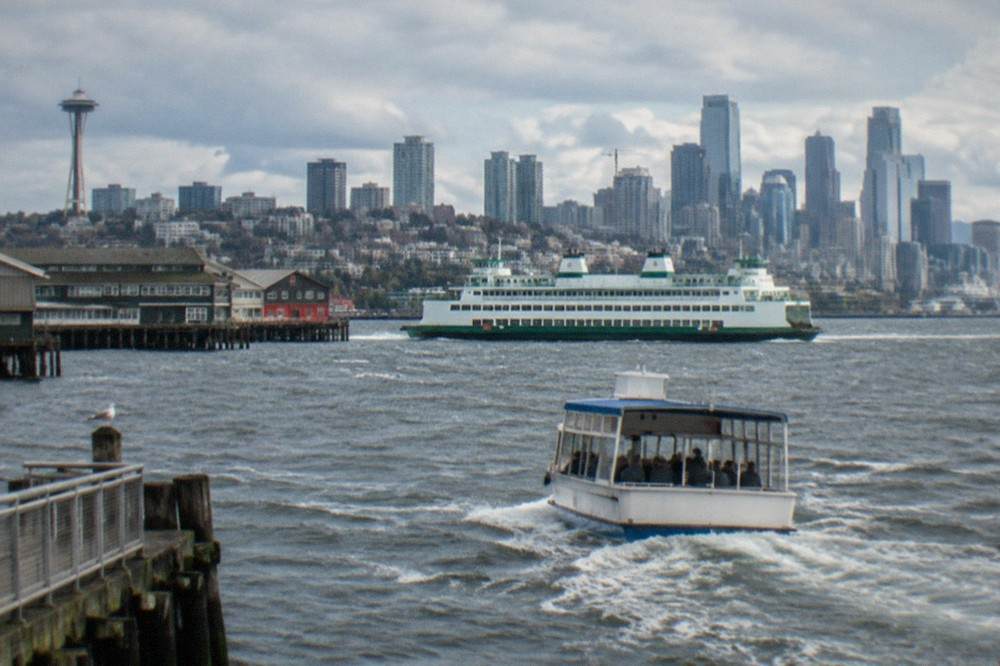
The distinction matters more in Seattle than in most port cities, because the ferry here is genuinely good sightseeing. The Seattle-Bainbridge route was the busiest in the entire state ferry system in 2025, with more than 5.2 million riders, and a large share of those are visitors riding across for the view of the skyline, the Olympic Mountains behind it and the shipping traffic of Puget Sound. That popularity is exactly why the confusion exists. A ride that scenic feels like it should be a product someone sells you, and it is worth being blunt: nobody on this site sells it, and no private operator can sell it, because it is a public crossing run by the state.
A tour boat does something the ferry structurally cannot. It chooses its route for the view rather than for the destination, it slows down or holds position at the sights worth seeing, and it puts a human guide on a microphone to explain what you are looking at. On the roster this site covers, the narrated options range from a one-hour loop of Elliott Bay from Pier 55 to a two-hour transit through the Ballard Locks connecting saltwater to freshwater, with live commentary on the skyline, the port, the locks and the wildlife the whole way.
The ferry, by contrast, has a job to do. It leaves when the timetable says, it travels the straight line between two terminals at working speed, and it docks on schedule so the next crossing can load. If a pod of orcas surfaces off the bow, the captain does not circle back; if the light turns golden over the Olympics, nobody extends the crossing to let you photograph it. That is not a flaw, it is the nature of transit, and for eleven dollars it remains one of the great bargains of the Pacific Northwest.
If you are weighing the two for a single afternoon, the more useful framing is not "which is better" but "what is each one for." The ferry is a crossing with a view attached. The tour is a loop with a story attached. Plenty of visitors do both in one day, and the geography makes that easy: the ferry terminal at Pier 52 sits a few blocks south of the commercial cruise piers, so a morning harbor cruise and an afternoon ferry crossing can share a single parking spot or transit ride.
How Much Does A Ferry Crossing Cost Compared To A Narrated Cruise?
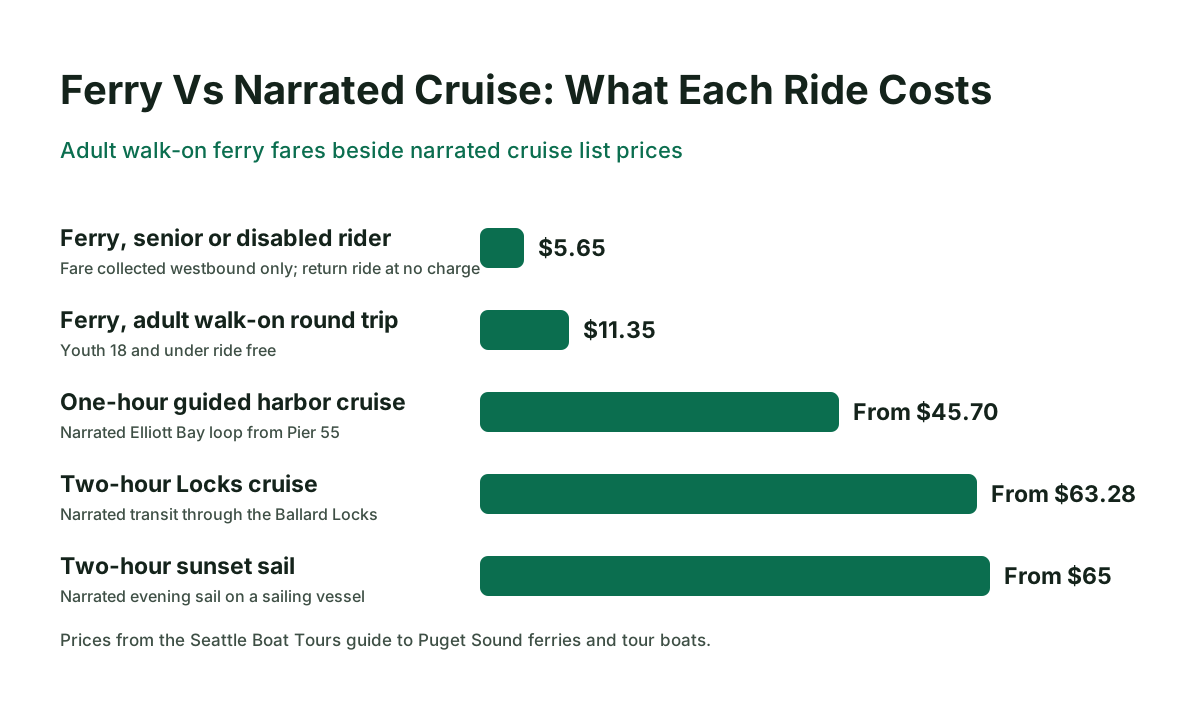
An adult round-trip on the Seattle-Bainbridge ferry costs $11.35, with youth 18 and under riding free, while narrated cruises on this site run from $45.70 for a one-hour harbor loop to $80 per person for a two-hour sunset sail. The ferry is the cheapest scenic ride in the city by a wide margin, and the gap in price reflects the gap in product, not a bargain waiting to be found.
The fare structure is worth understanding before you board, because it is unusual. The crossing is collected in one direction only, westbound from Seattle, so a walk-on passenger buys a round trip at Colman Dock and rides back at no charge. An adult pays $11.35, a senior or disabled rider pays $5.65, anyone 18 or under rides free, and a bicycle adds a $1 surcharge for riders 19 and up. Those figures come straight from the WSDOT fares page, and the ferry system posts current tariffs at the official WSDOT fare detail for this route, which is where to check before any trip, since tariffs are adjusted periodically.
Here is how the two categories of ride line up on price:
| Ride | Typical cost | What you get for it |
|---|---|---|
| Seattle-Bainbridge ferry, adult walk-on | $11.35 round trip | A 35-minute crossing each way, no narration |
| Seattle-Bainbridge ferry, youth 18 and under | Free | The same crossing |
| One-hour guided harbor cruise from Pier 55 | From $45.70 | A narrated Elliott Bay loop with a guide |
| Two-hour Locks cruise | From $63.28 | A narrated transit through the Ballard Locks |
| Two-hour sunset sail | From $65 | A narrated evening sail on a sailing vessel |
Read that table with the ferry's purpose in mind. Eleven dollars buys you the same saltwater, the same skyline and the same mountain backdrop that the cruise passengers are photographing, because both rides float in the same body of water. What the cruise fare buys is everything the fare system does not sell: a guide's commentary, a route selected for scenery, a round trip without a terminal at the far end, and a deck plan designed for sightseeing rather than for loading commuters and their cars.
For travelers counting a budget across a family, the arithmetic gets dramatic fast. On the ferry, a household with two adults and three teenagers pays only the two adult fares, since everyone 18 and under rides free, and that covers all five people in both directions. The same five people on a narrated harbor cruise pay five fares from $45.70 each. That does not make the cruise a bad purchase, it makes the two rides different purchases, and the deciding question is whether the commentary and the curated loop matter to your group. For a family that wants to "see the water" cheaply, the ferry wins outright. For a household that wants to understand what it is looking at, the cruise earns its fare.
One structural detail closes the case: the ferry is one-way transit with a fixed destination. If your plan is "ride the boat, see the sights, be back for dinner," the ferry makes you account for the return sailing, the terminal walk on the Bainbridge side and the waiting time between departures, which runs roughly 30 to 60 minutes during daytime hours. A cruise departs and returns at the same downtown pier inside a fixed window, which is why the tour products carry durations like 1 hour, 2 hours or 2 hours (approx.) on their listings while the ferry carries a timetable instead.
For current sailing times, the route's schedule page is the source of truth, and the state posts it at the WSDOT schedule detail for the Seattle-Bainbridge route, including the fall, winter and spring seasonal variations.
Between the two options sits a fair question about value: at what point does the cheaper ride stop being the better one? If sightseeing is the entire goal and a guide's commentary is central to that goal, a crossing with no narration is a scenic ride with the story missing. If the goal is simply to be on Puget Sound with the skyline sliding past, spending five times more for a microphone adds little. The three listings above are the narrated anchors at three price points, from the $45.70 harbor loop to the $65 sunset sail, and each carries free cancellation on the listing, so the commitment is softer than it looks.
Where Do Ferries And Tour Boats Depart From On The Seattle Waterfront?
The ferry leaves from Colman Dock at Pier 52, the large state terminal on the south end of the central waterfront, while the narrated cruises on this site depart from the commercial piers just north of it, mainly Pier 55 and Pier 54, plus a handful of docks along Alaskan Way. Everything sits within a 10 to 15 minute walk of everything else, so a ferry trip and a cruise can share a single visit to the waterfront.
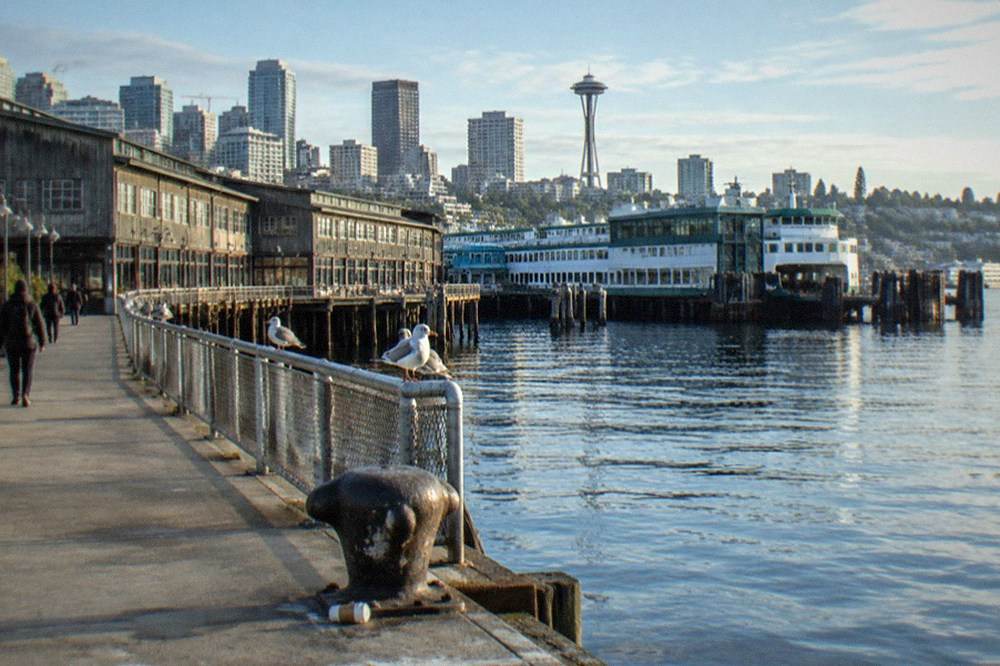
The geography is simple once you can picture the street. Alaskan Way runs the length of the central waterfront, and the piers are numbered as they go south to north. Colman Dock, the ferry terminal, is Pier 52, at the south end of the stretch. One block north is Pier 54, where the locks cruises and the happy hour cruise on this roster board. Pier 55 is the main dock of the harbor cruise operator, which has run Seattle harbor cruises since the early 1950s. Pier 56 is home to one of the sunset sailing cruises, and the sailing fleet that departs from 1201 Alaskan Way boards a short distance beyond it. A reader who wants the full pier-by-pier breakdown will find it in the waterfront departure points guide, which maps every dock on the roster.
| Departure point | What leaves from there | Type of ride |
|---|---|---|
| Colman Dock, Pier 52 | Seattle-Bainbridge state ferry | Public transit crossing |
| Pier 54 | Locks cruises, happy hour cruise | Narrated cruises |
| Pier 55 | One-hour guided harbor cruise | Narrated cruise |
| Pier 56 | Sunset sailing cruise | Narrated evening sail |
| 1201 Alaskan Way | 70-foot sailing cruises | Narrated sailing trips |
The walking distances involved are short enough that the two rides complement rather than compete. From the ferry terminal's main entrance to the boarding gangway at Pier 55 is a comfortable stroll along the new waterfront promenade, past the aquarium and the rebuilt park piers, on ground that was transformed by the waterfront redevelopment completed in recent years. Visitors arriving by light rail connect at Pioneer Square, a few blocks inland, and from there both the ferry terminal and the cruise piers sit within the same short stretch of waterfront.
Parking is where the planning differs. The ferry terminal serves commuters and walk-on traffic, with riders arriving by transit, on foot or by car, and vehicle drivers line up in the toll lanes at Colman Dock itself, since the crossing carries automobiles as well as passengers. Cruise passengers park in the commercial lots along Alaskan Way and the side streets of Belltown, then walk to their pier. A traveler planning to do both in one day is best served by parking once near the middle of the waterfront stretch and walking to each departure, which keeps the day simple and the cost of parking to a single fee.
Timing the two against each other takes a little care. The ferry runs on a fixed clock with departures spaced through the day, while each cruise runs its own schedule with a set start time printed on the listing. The order that works for most itineraries is the narrated cruise first, because its departure times are fixed and its duration is known, followed by the ferry whenever the next sailing fits, because a missed ferry costs you only a wait of roughly 30 to 60 minutes in daylight hours. The waterfront between the two is now a park in its own right, so the wait is not a dead loss.
The one-hour narrated harbor cruise is the natural first ride for a visitor who wants the guided version of what the ferry shows for free: the skyline from the water, the working port, the Olympic range beyond. It departs from Pier 55, a few minutes' walk from the ferry terminal, and the listing carries free cancellation, which matters when you are building a day around two separate departures.
What Does The Ferry Crossing Show You Versus A Guided Harbor Cruise?
The ferry shows you the Seattle skyline, the Olympic Mountains, Bainbridge Island and the open water of Puget Sound from a moving vessel at transit speed, best from the open solarium deck on the upper level. The guided harbor cruise shows you Elliott Bay at sightseeing speed, with live commentary identifying the container cranes, the stadiums, the waterfront piers and the marine traffic, and it returns you to your starting pier rather than landing you on an island.
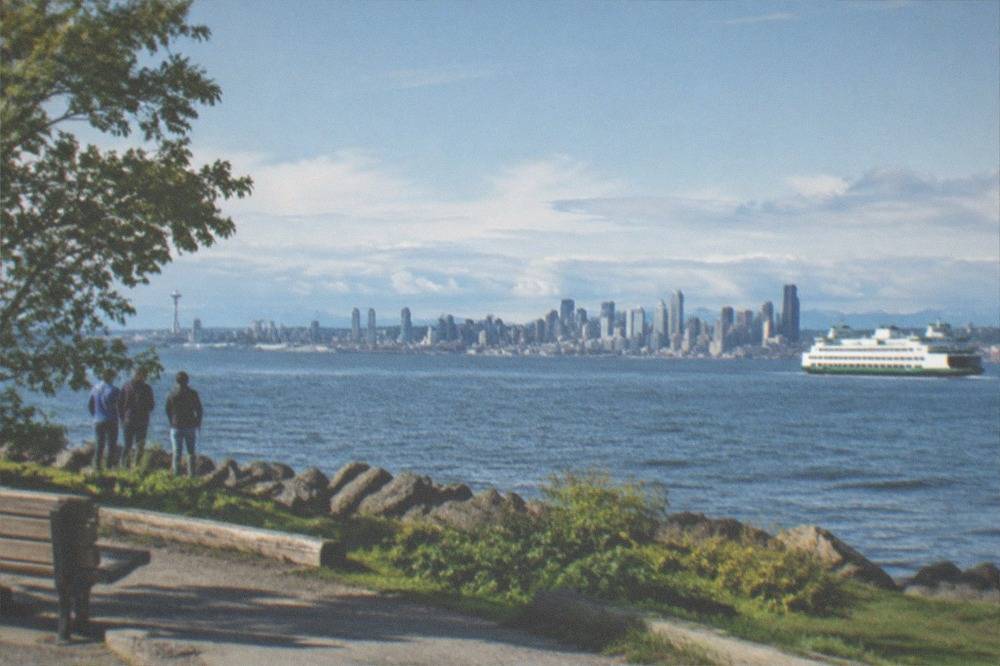
Both rides earn their reputations, and the difference in what they deliver is easiest to see by riding them in order. On the ferry, the skyline view is the star: the leaving is the attraction. As the vessel pulls out of Colman Dock, the downtown skyline stacks up behind you, the Great Wheel shrinking above the piers, the peaks of the Olympics coming up over the island ahead on clear days. The best vantage point is the upper outside deck, where the wind is real and the view wraps 360 degrees. There is no commentary, so what you see is what you know: the Space Needle's silhouette is identifiable, the ferries and container ships are just traffic unless you already know their stories, and the crossing ends at a small island town whose main street starts a short walk from the terminal.
The narrated harbor cruise covers different ground, literally. It stays inside Elliott Bay, working a loop past the waterfront piers, the port terminals with their cranes, the stadium district and the container operations that make Seattle a working seaport and not just a pretty one. The guide on the microphone is the product's spine: the commentary touches the city's maritime economy, the history of the piers, the redevelopment reshaping the shoreline and the wildlife that surfaces in the bay, and the route is chosen to hold the good angles long enough for photographs. This site's harbor cruise comparison page breaks down the specific operators and piers, but the short version is that the one-hour narrated loop from Pier 55 is the canonical guided counterpart to the ferry's free-form crossing.
Here is the honest overlap and the honest divergence:
| What the ferry gives you | What the narrated cruise gives you |
|---|---|
| Skyline, Olympics, open Puget Sound | Skyline, Elliott Bay, port and stadium angles |
| Roughly 35 minutes each way, fixed route | 1 hour loop from and to the same pier |
| No commentary, no guide | Live guide commentary throughout |
| Lands you at Bainbridge Island terminal | Returns to your downtown starting point |
| Vehicles, commuters and tourists aboard | Sightseeing passengers only |
What the ferry gives you that no cruise replicates is arrival. The crossing ends on Bainbridge Island, and the walk from the terminal up the main street to the island's shops, galleries and ice cream counters is a genuine half-day excursion, the kind of plan where the boat is the transport and the island is the destination. No cruise product on this site lands you anywhere; the loop is the point. Conversely, what the cruise gives you that the ferry cannot is interpretation and pace. A guide pointing at the cranes and explaining the port, or slowing past a seal haul-out, turns scenery into a story, and for visitors who want to leave knowing what they saw, that is the entire value of the ticket.
Wildlife is a place where expectations deserve calibrating on both rides. Puget Sound is a working marine environment, and the verified season windows matter: Bigg's transient orcas are present year-round, humpbacks are most common May through October, and the ferry deck is a perfectly good platform from which to spot any of them, because wildlife does not distinguish between transit and tourism. But a crossing takes one line across the Sound at speed, while a dedicated wildlife cruise, covered in the site's whale watching guide, spends three to five hours actively seeking them out with a crew that knows where to look. The honest ranking for whale-focused travelers is dedicated tour first, ferry a pleasant surprise, harbor cruise somewhere between.
For the visitor deciding with a wallet rather than a wish list, the one-hour harbor cruise at 4.7 from 2,252 reviews is the guided baseline, and the 2,252-review pool makes that rating meaningful rather than cosmetic. It is the ride to book when the question is "what am I looking at," and it costs a few multiples of the ferry fare precisely because a guide and a looped route are what it sells.
When Do Ferries And Tour Boats Run Through The Year?
Ferries run year-round on a published seasonal timetable, with sailings roughly every 30 to 60 minutes in daytime hours on the Seattle-Bainbridge route, while the narrated cruise season on this site's roster peaks roughly April through October, with many operators reducing or pausing regular public sailings from November into early spring. In practical terms, the ferry is the reliable off-season ride and the cruise calendar is a summer product.
That asymmetry is one of the most practical facts on this page and one of the least advertised. Washington State Ferries publishes four seasonal schedules per route, shifting between summer, fall, winter and spring service levels, and the Seattle-Bainbridge crossing, as the system's busiest, keeps frequent sailings across all of them, with two vessels typically assigned in the fall season. The cruise fleet behaves differently. Seattle's sightseeing and sunset season runs roughly April/May through October, aligned with longer daylight and the Port of Seattle's cruise-ship season, which brought 330 vessel calls and roughly 2.1 million passengers through the piers in the most recent record year. Once the light collapses, with sunsets sliding from about 7:51 in early September to 4:19 at the December low, the evening products lose their premise and many go quiet until spring.
| Season | Seattle-Bainbridge ferry | Narrated cruises on this roster |
|---|---|---|
| Spring, April to June | Frequent scheduled sailings | Season opening, schedules building toward daily |
| Summer, July to August | Peak frequency, two vessels | Full schedules, daily departures |
| Fall, September to October | Regular fall timetable begins late September | Peak continues into October, then thins |
| Winter, November to March | Reduced but year-round service | Many operators reduce or pause sailings |
The winter gap deserves a plain statement for anyone planning a cold-weather visit. From November through March, the ferry remains the dependable water experience in Seattle: it sails on its timetable, it is covered and heated indoors, and a round trip in winter weather is a legitimate way to see the Sound when little else on the water is running. The cruise calendar is thinner by design, since several listing types on the roster, the sunset sails especially, depend on evening light that does not exist in a Seattle December. Some operators run modified schedules or private charters through the shoulder months, and the seasonal timing guide walks through month by month which ride categories are live when.
Special events bend both calendars. The summer of the FIFA World Cup matches in Seattle pushed waterfront demand sharply upward, and the state ferry system reported strong ridership through the early summer, with more than 9.4 million system riders by late June. On the cruise side, operators added match-day and themed sailings around the same period. None of that changes the structural rule: check the ferry timetable and the individual listing before you plan, because the ferry's seasonal schedule change dates and each cruise's operating months are the two variables a printed plan cannot freeze.
Can You Ride The Ferry As A Sightseeing Trip Without Taking A Tour?
Yes, with limits. Walk-on passengers routinely ride the Seattle-Bainbridge ferry out and back purely for the view, paying the $11.35 adult round trip once at Colman Dock, staying aboard or exploring Bainbridge for an hour, and returning on a later sailing. It is a legitimate, cheap sightseeing excursion, and it remains transit throughout: no narration, no stops, and the schedule, not your itinerary, sets the pace.
The out-and-back ride is a genuine Seattle move and this page will not pretend otherwise. The pattern that works: arrive at Colman Dock, buy the round-trip fare as a walk-on, ride the 35-minute crossing to Bainbridge Island, and either walk straight back into the return line or spend an interval on the island, which has a walkable main street, wine tasting rooms, a small museum and waterfront parks, all within a flat stroll of the terminal. The return leg is included in the fare you already paid, and the crossing back delivers the best angle of the whole trip, the downtown skyline approaching across the water, with the Olympics often lit behind the ferry's wake. Riders under 19 ride free and seniors pay $5.65, which makes the family arithmetic the cheapest water experience in the city.
What the out-and-back cannot do is become a tour by intention. There is no guide, no loop, no held position at anything scenic, and no vessel designed around sightseeing. The vessel is built to move passengers and vehicles on a schedule, and the views are the ones that happen to be out the window. Travelers who want the curated version of the same water, with commentary and a route chosen for the angles, cross into the cruise side of the comparison. The locks cruise is the sharpest contrast of all: its two-hour narrated route leaves Pier 54, crosses Elliott Bay and transits the Ballard Locks, lifting the boat up to 26 feet through the freshwater side, passing the fish ladder that counts tens of thousands of salmon a season, and it ends on Lake Union. That ride does something no ferry ride can, and its 4.8 rating from 452 reviews reflects a product with a real mechanism at its center.
For the traveler deciding between them, the honest summary is that the ferry out-and-back is the best free-form scenic hour in Seattle and the locks cruise is the best engineered one. The two even share the same opening move, boarding a vessel on the central waterfront, and a determined visitor can ride a narrated locks cruise one day and the ferry the next, seeing the locks machinery, the ship canal, the floating homes and the skyline each with the appropriate kind of attention.
The locks cruise, from $63.28 with a 4.8 rating across 452 reviews, carries a free-cancellation policy on its listing and a real urgency badge reading "Booked 3 times today." It is the narrated ride that doubles as a piece of civil engineering, and its appeal sits exactly where the ferry's does not: in the thing that happens to the boat rather than the things that pass outside it.
Which Ride Should You Choose For A Seattle Visit?
Choose the ferry if you want the cheapest scenic ride in the region, a genuine island destination, a year-round timetable or a family outing where everyone 18 and under rides free, and choose a narrated cruise if you want a guide's commentary, a route picked for the views and a return to your starting pier. The best plan for a longer visit is both.
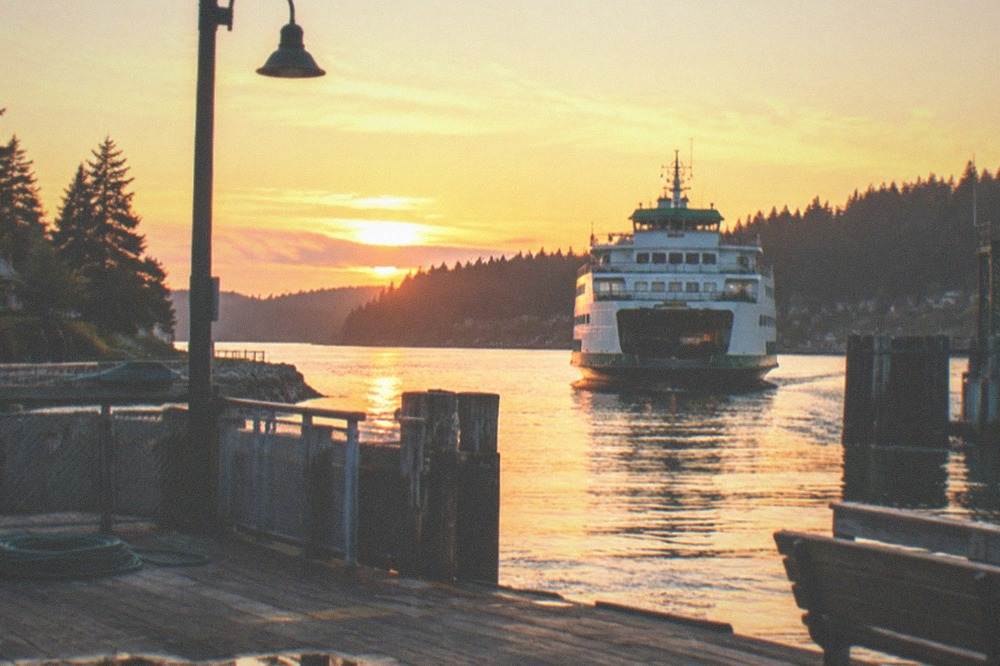
A few decision rules compress the whole comparison. If your day has a fixed shape, say a dinner reservation or a cruise-ship departure, book the narrated product, because its start and end times are printed and its pier is fixed. If your day is loose and the weather is good, ride the ferry, because the timetable absorbs delays at the cost of a short wait. If you are traveling with teenagers, the ferry is free for them and the excursion becomes an island walk. If you are traveling with visitors who ask questions, the cruise guide answers them and the ferry does not.
Budget cuts the other way in one place worth flagging: the sunset sail. The two-hour Evening Colors sunset sail, from $65 with a 4.8 rating across 723 reviews, operates in the exact window the ferry serves least well, the last hour of light, when a narrated sailing vessel holds the golden angles over the Olympics while a ferry runs its schedule. Its listing carries the urgency badge "Booked 5+ times in 12 hours," one of the roster's real sell-out signals, so it is the one narrated product where timing a booking matters as much as timing the sunset.
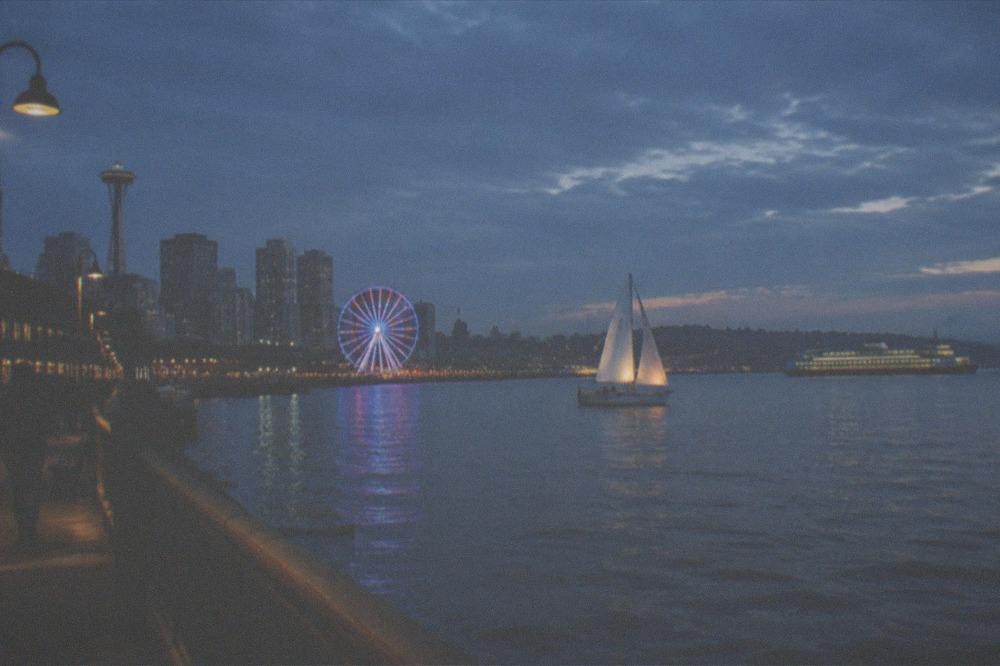
For the classic first-visit plan, the sequence that works is a narrated harbor cruise on day one, the ferry crossing with a Bainbridge walk on day two, and a sunset sail on the evening that matters. That plan uses each product for what it is: the cruise to learn the waterfront, the ferry to cross it, the sail to end on it. Travelers pairing a boat ride with a bigger Alaska itinerary can fold in the pre-cruise waterfront planning guide, since the cruise terminals at Pier 66 and Pier 91 sit a short ride from the same departure piers.
Whatever the choice, the comparison this page exists to make is the honest one: the state ferry is public transit and never a tour product, sold by nobody, narrated by nobody, and priced accordingly. The narrated cruises are products, with guides and routes and free cancellation on their listings. That distinction runs through everything on Seattle Boat Tours, and the visitors who enjoy Seattle's water most are usually the ones who understood it before they boarded.
Common Questions About Puget Sound Ferries And Tour Boats
Is The Seattle-Bainbridge Ferry A Tour?
No. It is a scheduled public transit crossing operated by Washington State Ferries, carrying commuters, vehicles and visitors between Colman Dock at Pier 52 and Bainbridge Island in about 35 minutes. There is no narration, no guided routing and no sightseeing product attached, and no operator on this site sells it. It can be ridden as a scenic excursion, but it remains transit the whole way.
How Much Does The Ferry Cost Versus A Narrated Cruise?
The ferry's adult round-trip fare is $11.35, collected westbound at Colman Dock, with seniors at $5.65 and youth 18 and under free. Narrated cruises on this roster run from $45.70 for a one-hour harbor loop to about $80 per person for a two-hour sunset sail. The ferry is dramatically cheaper because it is a subsidized public crossing, not because the cruises are overpriced.
Can You Ride The Ferry Out And Back Without Leaving The Terminal On Bainbridge?
Yes. Walk-on passengers can stay aboard at Bainbridge and reboard the return sailing, or step off for an hour on the island's walkable main street near the terminal. The fare already covers the return leg. Sailings run roughly every 30 to 60 minutes in daytime hours, so the wait for the return is usually short.
Do The Ferry And The Cruise Boats Leave From The Same Place?
Almost. The ferry leaves from Colman Dock at Pier 52, and the narrated cruises on this roster board from the commercial piers just north of it, mainly Pier 54, Pier 55 and Pier 56 along Alaskan Way. The whole stretch is a 10 to 15 minute walk along the waterfront promenade, so a visitor can plan both rides from a single parking spot.
Which Ride Is Better In Winter?
The ferry, without much contest. Washington State Ferries runs the Seattle-Bainbridge route year-round on published seasonal timetables, with covered, heated passenger salons. The narrated cruise season peaks roughly April through October, and many operators reduce or pause regular public sailings from November into early spring as daylight shortens and sunset-dependent products lose their premise.
Can A Ferry Ride Replace A Guided Harbor Cruise?
It can cover the scenery but not the guide. Both rides float the same skyline and mountain backdrop, so a visitor who just wants to be on Puget Sound with a view gets that from the ferry for $11.35. What the cruise adds is live commentary, a route selected for the best angles, a looped return to the starting pier and a known duration, which is what the higher fare buys.