Is Seattle Worth Visiting In Summer?
Summer is Seattle's warmest, brightest stretch and the peak window for harbor cruises, sunset sails, and whale watching. This longread checks the real weather, daylight, and tour-season numbers before you book.
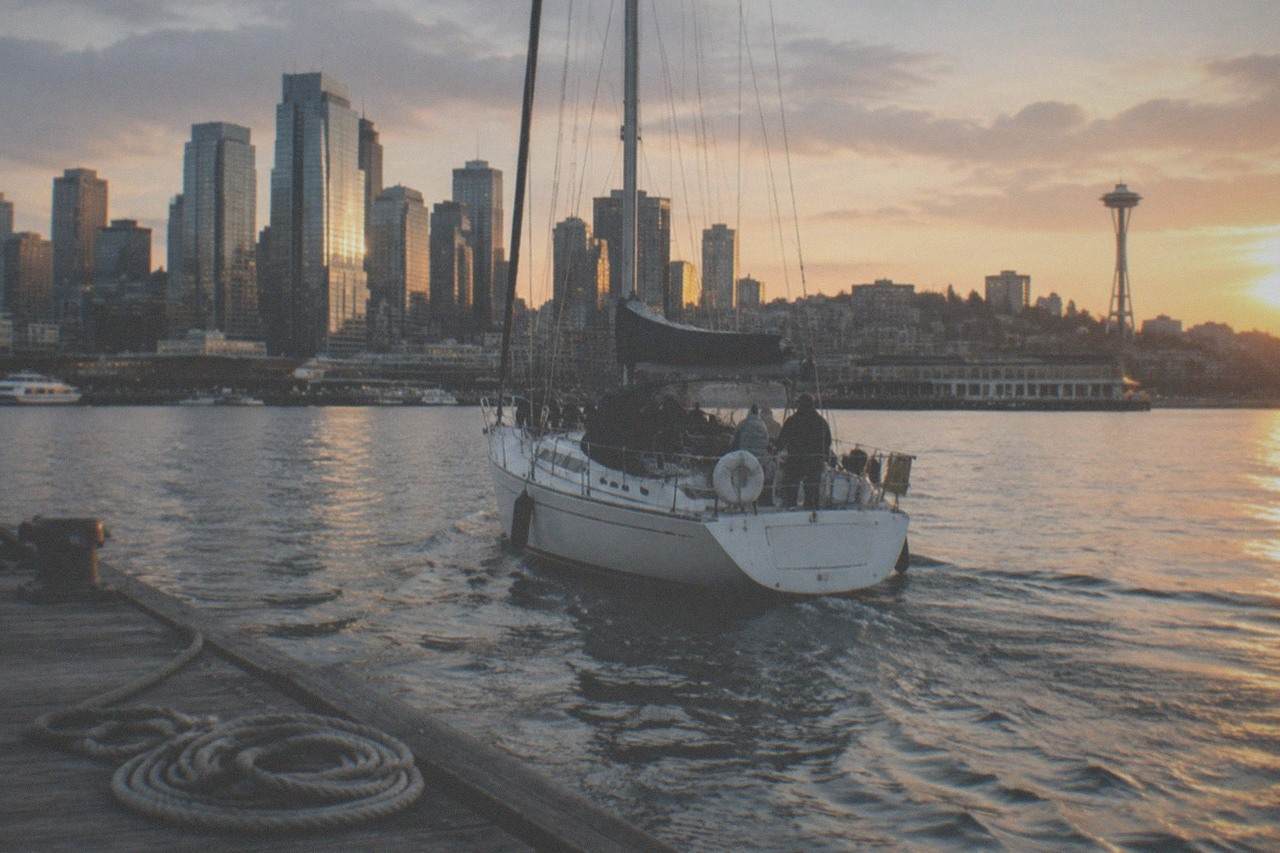
Seattle's summer reputation rests on three measurable things: the warmest daytime temperatures of the year, the longest stretches of evening light, and a boat-tour schedule that expands to match both. In July 2026 the city logged only 0.42 inches of rain against a normal of 0.60, and total daylight for the month reached 483 hours and 19 minutes. Those are not marketing claims. They are the numbers that drive the season. This guide from Seattle Boat Tours walks through what a summer visit actually looks like, which tours run in the high-season window from roughly April or May through October, and where the real trade-offs sit.
What Makes Seattle Summer Weather Different?
Seattle summers are drier and sunnier than the city's rainy reputation suggests, with July and August each bringing less than an inch of rain in 2026 and daily high temperatures in the low to mid 70s Fahrenheit. The season also brings the year's warmest stretches, including a record high of 95 degrees Fahrenheit on July 22, 2026, while winter lows can dip to the mid 20s.
The classic Seattle rain story is a winter story. January 2026 produced 4.27 inches against a normal of 5.78, and March came in at 6.71 inches versus a normal of 4.17. By the time June arrives the pattern flips. The table below shows the actual 2026 monthly rainfall totals for the three core summer months alongside the 1991 to 2020 normals, using data published on September 22, 2026.
| Month | 2026 Rainfall (inches) | Normal Rainfall (inches) |
|---|---|---|
| June | 1.34 | 1.45 |
| July | 0.42 | 0.60 |
| August | 0.56 | 0.97 |
Summer warmth tracks the long-term 1991 to 2020 normals: June averages 62.0°F, July 67.1°F, and August 67.4°F, mild figures that suit a few hours on the water. June sits at a daily mean of about 62.0 degrees Fahrenheit, July rises to 67.1, and August lands at 67.4. The record high for the calendar year 2026 was 95 degrees on July 22, while the record low was 26 degrees on January 25. Those are the two ends of the range a visitor plans around.
The practical takeaway is that a summer trip means packing for mild afternoons and cooler evenings on the water. A harbor cruise at 3 p.m. feels different from a sunset sail at 8:45 p.m., even on the same day. That split is one reason the tour schedule leans so heavily into evening departures between June and August. For the month-by-month pattern, see the Seattle weather by month guide.
The three tours above cover the main formats that run through the summer months. The harbor cruise is the short, narrated introduction; the sunset sail stretches into the evening; the whale-watching trip is the longest commitment and the most weather-dependent. Each one leans on the same seasonal fact: long daylight and a dry stretch from late June through August.
How Long Are The Days In June And July?
Seattle gains roughly four to five hours of daylight between the winter solstice and the summer peak, with June 2026 totaling 477 hours and 2 minutes and July reaching 483 hours and 19 minutes. Sunset times in late June sit around 8:58 to 9:11 p.m., which means an evening sail can run almost entirely in daylight before the sky turns color.
The astronomical numbers are worth stating plainly. January 2026 brought only 275 hours and 17 minutes of daylight, while June and July each ran 477 and 483 hours respectively. The table below shows the total daylight by month for the three summer months plus the shoulder month of May, drawn from the 2026 daylight calendar.
| Month | Total Daylight Hours |
|---|---|
| May | 466 hours 52 minutes |
| June | 477 hours 2 minutes |
| July | 483 hours 19 minutes |
| August | 443 hours 54 minutes |
Sunset times tell the same story in a more usable form. On June 25, 2026, the sun set around 9:11 p.m. in Seattle, the latest point of the year. By September 1 that number has slipped to 7:51 p.m., and by the end of September it is 6:52 p.m. A tour that departs at 7:30 p.m. in late June still has nearly two hours of visible sky. The same departure time in September runs most of the sail in twilight and darkness.
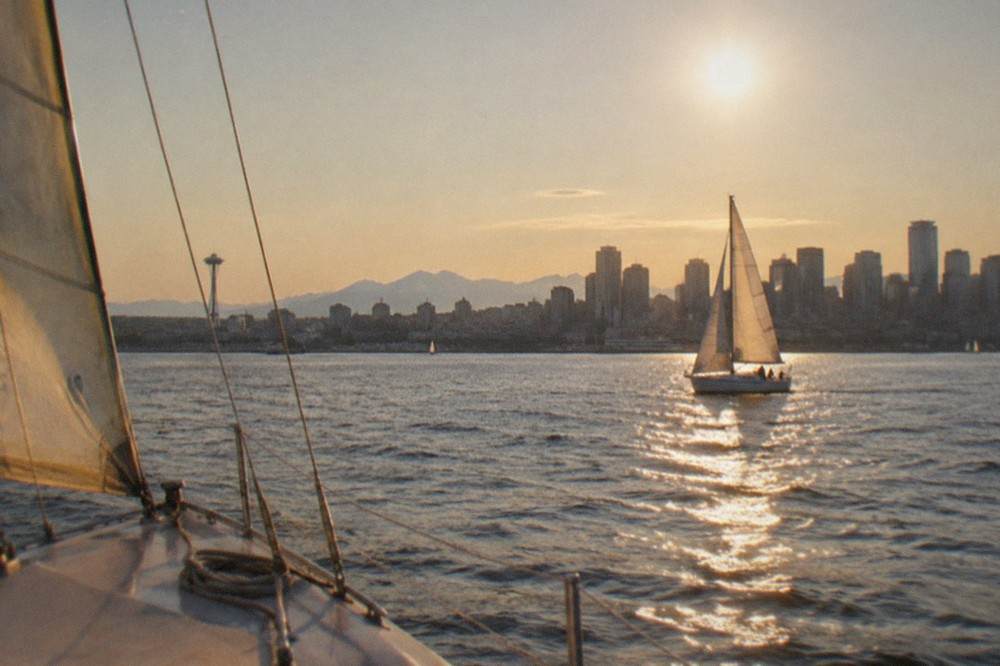
Operators build the schedule around this late light. Sunset and happy hour cruises are the most obvious example, but even daytime harbor cruises stretch into evening slots in July and August because demand and daylight both hold. The season is not endless, though. August drops back to 443 hours and 54 minutes of daylight, and September falls below 380. The high-season window narrows as the equinox approaches. The best time for a Seattle boat tour by season guide covers how those daylight totals translate into shoulder-month departures.
The Evening Colors sail is the clearest example of a tour built around the late light. Its two-hour length means a June departure returns well after sunset, while a September departure finishes closer to full darkness. That is why the same tour feels different depending on which summer month you choose.
These are the numbers that push summer into the top spot for a boat-focused visit. The combination of low rain, late sunsets and a cruise season that fills the waterfront means the city is both busier and more open at the same time.
Beyond the raw hour counts, the quality of light matters just as much for a boat tour. In late June, the sun sits low on the horizon for an extended period, creating a prolonged golden hour that photographers chase. The sky often holds a soft glow until nearly 10 p.m., so a 7:30 p.m. departure catches the best light for shoreline views of the Olympic Mountains and the city skyline. Civil twilight, the window when there is enough natural light to move around without artificial aids, lasts roughly 40 minutes after sunset in Seattle during the weeks around the solstice. For a captain, that translates to a wide margin of usable light even on a two-hour evening sail.
The early mornings are equally generous. Sunrise typically arrives before 5:30 a.m. through much of June, giving early-riser kayak tours and wildlife-watching cruises a long, calm window before the afternoon breeze picks up. This symmetry of light at both ends of the day is what makes June and July feel almost endless. It also explains why the same departure time yields such a different experience by late August, when the morning light is noticeably later and the evening glow fades faster.
Which Boat Tours Run In Summer?
Most tour formats on this roster run their fullest schedules between late spring and early fall, with harbor cruises, sunset sails, Ballard Locks transits, and whale-watching departures all operating through the summer window from roughly April or May through October. The specific frequency varies by operator, but no listing on this site promises a year-round daily schedule.
The pattern is consistent across the city. Argosy Cruises has operated Seattle harbor cruises since the early 1950s and keeps its main dock at Pier 55, with seasonal additional boarding at Pier 54. The harbor cruise runs about one hour and departs from Pier 55. The sunset sail on the Evening Colors tour departs from 2201 Alaskan Way and runs about two hours. Both are peak-summer products because their departure windows line up with the longest days.
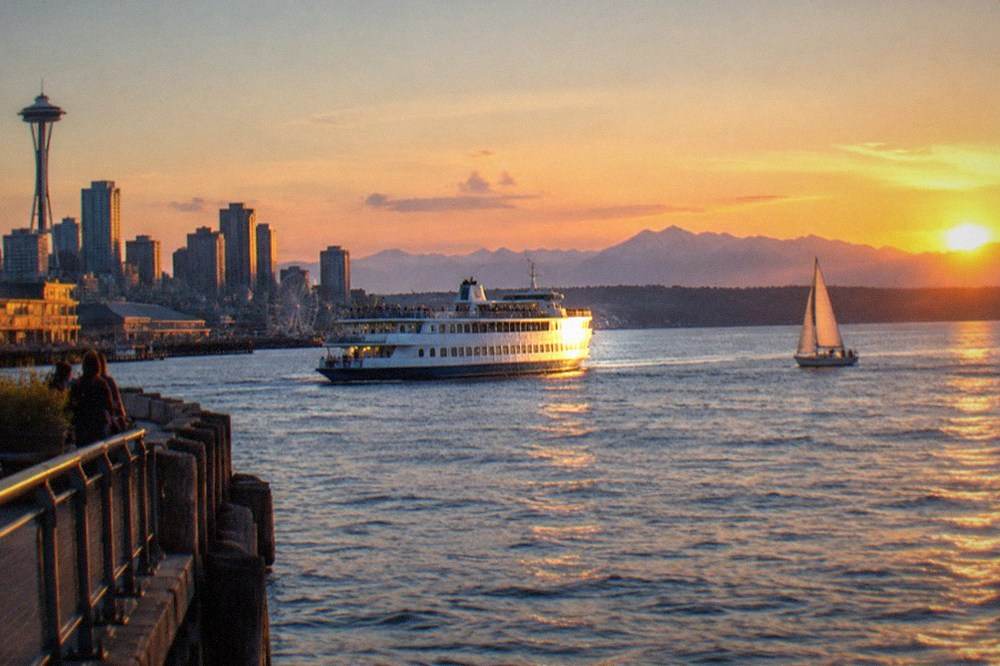
What a visitor notices most in July and August is the density of options. A one-hour harbor cruise can run mid-morning, early afternoon, and into the evening on the same day. A two-hour sunset sail might only have one or two departure times because it is tied to the sun. Whale-watching trips run daily through late September and then drop to reduced frequency in early winter, according to operator schedule pages cited in the 2026 season data. That reduction is the clearest sign that summer is the peak.
The Evening Colors sail is the most direct way to see how daylight and demand combine. Its departure point at 2201 Alaskan Way sits near the heart of the central waterfront, and its two-hour length means the return happens well after sunset in June and July but before full darkness in September. The listing states free cancellation, which gives a plan some flexibility during the busiest stretch of the year.
Not every summer tour is a harbor product. Both Ballard Locks cruise listings depart from Pier 54 on the waterfront or AGC Marina on Lake Union, and each runs about two hours. A locks transit is a slower, more mechanical experience than a harbor loop, and it appeals to a different visitor. Those tours also operate on summer schedules, with the Argosy locks option running Thursdays through Sundays in recent seasons, but each operator adjusts its own calendar. The locks themselves are a working piece of infrastructure: the large lock is 80 by 825 feet, the small lock is 30 by 150 feet, and the elevation change can reach about 26 feet depending on the tide. The fish ladder and the roughly 40,000 to 50,000 vessel transits a year make the transit feel like a small engineering tour rather than a scenic cruise.
How Does Summer Compare To Spring And Fall?
Summer is warmer and drier than spring, and it holds more daylight than fall. The daily mean temperature climbs from 51.3 degrees Fahrenheit in April to 57.5 in May, then peaks at 67.4 in August before dropping to 62.6 in September and 53.8 in October. Rainfall follows the opposite track, with spring and fall both wetter than the July low of 0.42 inches.
The shoulder seasons are not bad choices. They simply trade some warmth and light for smaller crowds and often lower demand. April 2026 brought 2.77 inches of rain, and May dropped to 1.14 inches, which is already close to summer territory. September's partial total through the 18th or 21st was 1.03 inches, but the normal for the full month is about 1.61 inches. A late-spring or early-fall visitor can still catch decent weather, just with less certainty.
| Month | Daily Mean Temperature (Fahrenheit) |
|---|---|
| April | 51.3 |
| May | 57.5 |
| June | 62.0 |
| July | 67.1 |
| August | 67.4 |
| September | 62.6 |
| October | 53.8 |
The temperature table shows why summer feels like a distinct season rather than a gradual continuation of spring. The jump from May to July is about 9.6 degrees in daily mean, and the drop from August to October is 13.6 degrees. That swing is large enough to change what you wear on the water and how late you want to stay out. A July evening sail is comfortable in a light layer; an October evening sail often needs a jacket and a tolerance for early darkness.
Is Summer A Good Time For Whale Watching?
Summer is the most reliable window for humpback whales near Seattle, with presence typically running from May through October, while Southern Resident killer whales are most commonly reported between April or May and September or October. No tour can guarantee a sighting; the honest way to read any whale-watching listing is as a better or worse season, never a promise.
The species split matters. Bigg's, or transient, killer whales are present in Puget Sound year-round, so a whale-watching tour in any month has some chance of seeing that ecotype. Southern Resident killer whales follow a more seasonal pattern, and humpbacks arrive in force from May through October. Gray whales are primarily a February through May animal, which means a summer visit misses the gray whale window but catches the larger humpback presence. The what month is best for whale watching in Seattle post breaks down the species calendar in more detail.
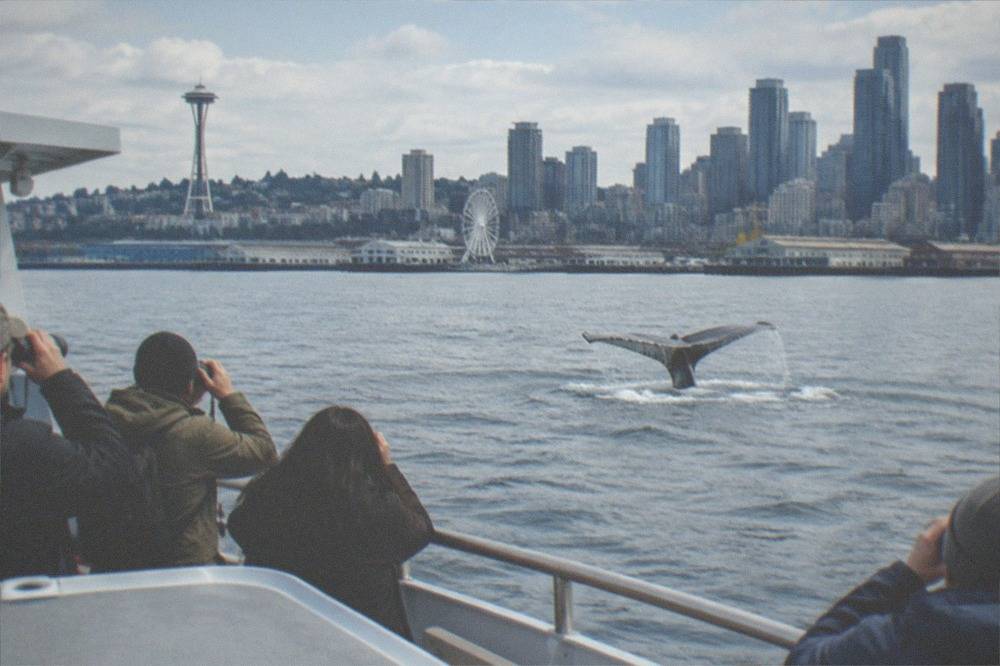
Any tour operator worth booking will state the season honestly. The roster's wildlife and whale-watching cruise from Seattle carries a 4.5 rating from 653 reviews and runs 3 to 5 hours, departing from 2701 Alaskan Way. That length is typical because the boat has to cover distance to reach the feeding grounds. The half-day alternative, with a 4.3 rating from 390 reviews and a price from $154.97, does the same job over a matching 3 to 5 hours. Neither listing guarantees whales, and no reputable page should.
The half-day option is the better solo pick for a summer traveler who wants the full whale-watching experience without the longer Deception Pass add-on. Its departure point at 2701 Alaskan Way is the same pier area as the other wildlife trips, and the 3 to 5 hour range covers the typical out-and-back to the San Juan Islands or the Strait of Juan de Fuca. That is the honest structure: a long boat ride in exchange for the season's best odds.
What Are The Downsides Of Visiting Seattle In Summer?
Summer is the busiest stretch on the Seattle waterfront, driven by the Alaska cruise season, which ran from April 17 through October 11 in 2026 with 330 vessel calls and about 2.1 million revenue passengers. That volume means central piers, restaurants, and popular tour departure slots feel more crowded than at any other time of the year.
The crowd math is straightforward. The Port of Seattle reported the 2026 Alaska season as its busiest on record, with 16 homeported ships and first-time calls from MSC Cruises and Virgin Voyages. Those passengers move through Bell Street Cruise Terminal at Pier 66 and Smith Cove at Pier 91, but many also spend time at the central waterfront before or after sailing. The result is a waterfront that can feel like a cruise terminal district on peak turn-around days.
A second trade-off is schedule competition. Some tour listings show real sell-out tendencies during summer, but only those with a verified urgency badge on the roster are safe to describe that way. The general risk is not that every boat sells out, but that the best departure times, especially evening sunset sails on Friday and Saturday, fill more quickly than a shoulder-season slot would. That is a demand story, not a capacity guarantee.
The third honest downside is that the dry, bright window is finite. August daylight drops by about 39 hours compared with July, and September loses another 64. A late-August visitor still gets a summer experience, but a late-September visitor is already watching the sun set before 7:00 p.m. and noticing the first cool evenings. The season does not end all at once, but it does erode week by week.
None of this makes summer a bad choice. It makes summer the obvious peak, which means a visitor trades some crowding and schedule competition for the widest possible set of tour options. That is the correct framing.
The same three tours that opened this guide close it for a reason: each one is a summer product at its core. The harbor cruise is the easy one-hour loop, the sunset sail uses the late light, and the whale-watching trip leans on the seasonal migration. For a first-time visitor weighing a summer trip against a spring or fall trip, the answer is that summer wins on daylight, tour frequency, and the simple fact that the waterfront is fully open.
Common Questions About Visiting Seattle In Summer
Is July Or August Better For A Boat Tour In Seattle?
July tends to be slightly drier and a touch longer in daylight than August, but both months sit inside the peak window. July 2026 logged 0.42 inches of rain versus August's 0.56, and July's daylight total of 483 hours and 19 minutes was the highest of any month. August drops to 443 hours and 54 minutes, so late-evening tours start a little earlier. Either month works well; July has the marginal edge on light.
Do Sunset Sails Only Run In Summer?
Sunset sails run most reliably from April through October, when sunset times stay late enough for a two-hour evening departure to include real daylight. The operator behind the Evening Colors Sunset Sail and similar trips keeps the schedule tied to the sun, so a winter departure would run almost entirely in darkness. The widest selection of evening tours appears from June through mid-September.
Is Whale Watching Better In Summer Than Spring?
It depends on the species. Gray whales are primarily seen February through May, so spring wins for that group. Humpbacks are most common May through October, which favors summer. Southern Resident killer whales are most reliable April or May through September or October, while Bigg's transient orcas are present year-round. No season guarantees a sighting, but summer gives the broadest mix of possible species.
How Crowded Is The Seattle Waterfront In Summer?
The central waterfront sees its highest foot traffic of the year during summer because the Alaska cruise season runs from April to October and brings about 2.1 million revenue passengers across 330 calls in 2026. Turn-around days at Pier 66 and Pier 91 push more people into the Pike Place Market and Pier 54 to Pier 62 corridor. The crowding is real but concentrated around cruise-ship arrivals and departures.
Can You Visit Seattle In Summer Without Booking Tours In Advance?
Most tours allow same-day booking when space remains, but the most popular evening departure slots fill faster in July and August than in spring or fall. The safest approach is to book a tour with free cancellation, like the Evening Colors Sunset Sail, and keep the schedule flexible. That gives you a confirmed seat during the peak season without losing the ability to adjust for weather.