What Month Is Best For Whale Watching In Seattle?
A month-by-month look at whale watching near Seattle, covering orca, humpback and gray whale season windows, tour schedules and how to pick the right month to go.
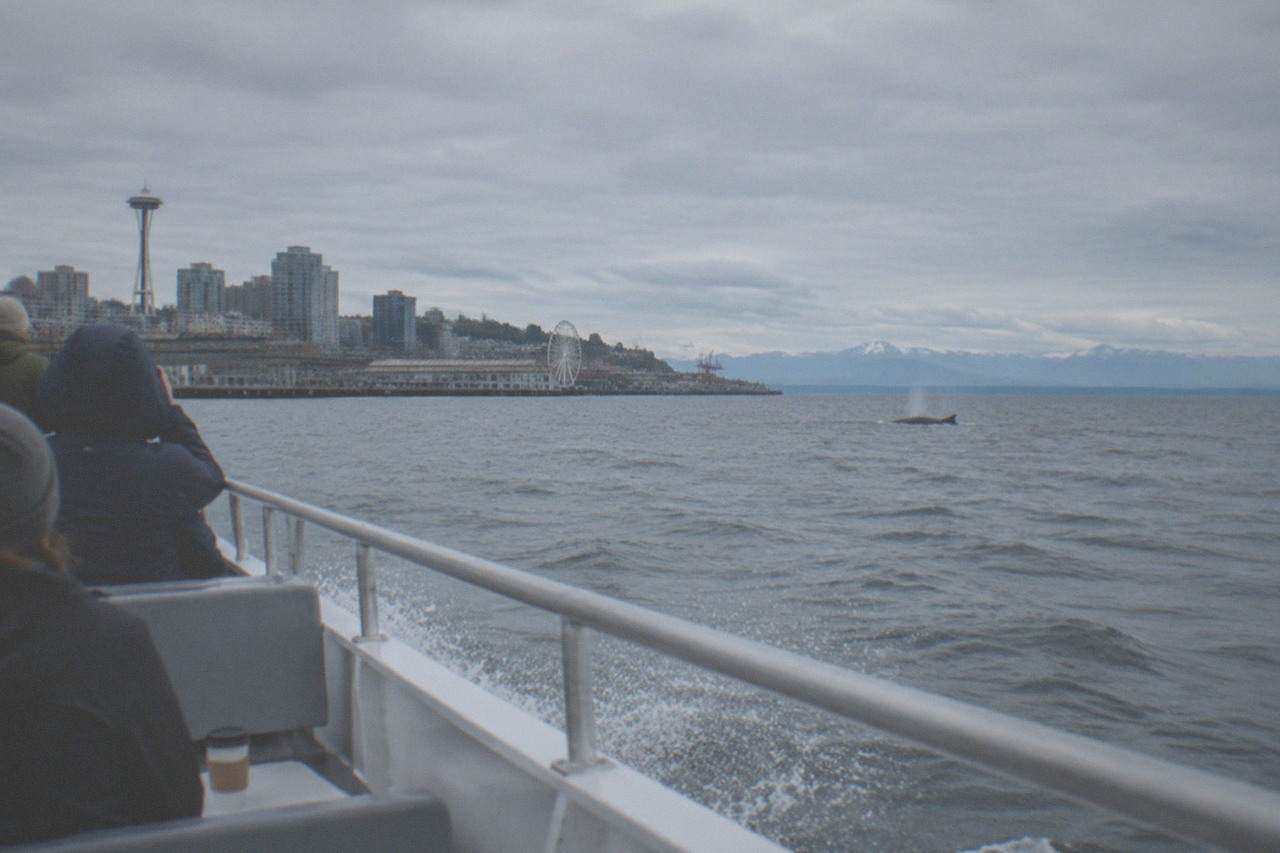
Puget Sound is one of the few places in the world where a whale watching trip can leave from a major downtown street corner and reach open saltwater within the hour. Two different kinds of killer whale live in or pass through these waters, Bigg's transients that hunt harbor seals year-round and the endangered Southern Residents that follow salmon runs through the summer, plus humpbacks that feed here from late spring into fall and gray whales that detour into the Sound each spring on their northbound migration. The month you choose decides which of those four you are most likely to see, and no month guarantees anything. This longread lays out the verified season windows, scores every month, and compares the three whale watching tours that depart from Seattle itself.
What Month Is Best For Whale Watching In Seattle?
The strongest single month is September, when summer whale watching overlaps the start of the fall salmon runs: Bigg's orcas are active, Southern Residents are still reliably in the wider Salish Sea through September and October, humpbacks are nearing their late-summer peak, and tour schedules are still running at high-season frequency with slightly thinner crowds than July and August.
September is the month where every season window in the verified data overlaps. Southern Resident killer whales are most reliably seen in the Salish Sea roughly April and May through September and October, so the back half of September still sits inside their core window. Humpbacks are most common May through October, and their surface activity, breaching, tail slaps, close approaches to the boat, tends to build through late summer. Bigg's transient orcas are the constant of the system: they are present in Puget Sound year-round, and their numbers have grown steadily over recent decades, with frequent sightings of matrilines like the T36s, T37s and T19s across South Puget Sound, Saratoga Passage and the Whidbey and Camano island shorelines.
The practical case for September is not just biology. The 2026 Alaska cruise season at the Port of Seattle, a useful proxy for peak visitor pressure on the waterfront, ran from mid-April to October 11, which means September tours still run at summer frequency while many families have gone home. Daylight is generous, with roughly 380 hours of it in the month, and the sun sets near 7:51 p.m. at the start of September and 6:52 p.m. at the end, so an afternoon departure still gets golden light on the water. Rainfall is modest by Seattle standards, with a normal of about 1.61 inches for the month, and the 2026 season actually ran drier than that through its first three weeks.
If September is spoken for, June through August are the conventional high season and they deliver, with the caveat that they are also when the boats are fullest. A detailed season guide is worth a read alongside this one: the best time of year for a Seattle boat tour covers how the whole cruise calendar, not just whale watching, shifts with the months.
For most visitors the natural starting point is the half-day trip from the central waterfront. The Seattle: Wildlife and Whale Watching Cruise runs 3 to 5 hours from 2701 Alaskan Way, is rated 4.5 from 653 reviews, costs from $150 per person, and carries free cancellation on the listing along with a "Likely to sell out" badge, so booking ahead is sensible in peak months.
That listing is the city's flagship whale trip by review volume, and its schedule follows the seasonal pattern of the whole fleet: daily departures through late September, then reduced frequency, for example Wednesday, Friday and Saturday only with holiday closures, from early November into January. If you are traveling outside the April-to-October core, check the operator's calendar for your exact dates rather than assuming daily sailings.
For anyone comparing the full field at once, these are the three Seattle-departing whale tours side by side.
Which Whales Swim Near Seattle In Each Season?
Four whale groups matter here: Bigg's transient orcas present year-round, Southern Resident killer whales most reliable April and May through September and October, humpbacks most common May through October, and gray whales, the local Sounders group, most common February through May. Those windows are typical patterns drawn from sighting data, not promises, and no tour or month guarantees a sighting.
The distinction between the two orca ecotypes does more work than most first-time visitors expect. Bigg's transients eat marine mammals, mainly harbor seals and porpoises, so they follow prey that lives in the Sound permanently, which is why they can be found in every month of the year. Southern Residents eat salmon, almost exclusively Chinook in summer, so their presence tracks the salmon runs and the Fraser River fishery to the north; they are in the wider Salish Sea on a roughly April-to-October pattern, peaking mid-summer. A boat that finds Bigg's orcas in December is having a normal December, not a lucky one.
The Southern Resident population is small and closely watched. The provisional July 2026 census counted 76 Southern Resident killer whales, up two from the 74 recorded in July 2025, with no adult or juvenile deaths reported in the prior year and multiple calves documented. J pod, and at times L pod, made notable visits to inland Puget Sound in September 2026, including a passage south of the Tacoma Narrows that was described as the first such early-season movement since February in some reports. Sightings near Point Robinson and other central Sound locations were active that month. In plain terms: the population is holding just above its recent low, and late summer still brings them within reach of Seattle-based boats.
Humpbacks are the quiet success story of the Sound. Once absent for decades after industrial whaling, they now feed here in growing numbers from May through October, with surface activity often at its best in late summer. Gray whales are the spring specialists: a small local feeding group nicknamed the Sounders, detours from the coastal migration into North Puget Sound each year to feed on ghost shrimp in the mudflats, most commonly February through May. Puget Sound Express publishes gray whale tour schedules with February-to-April departures from the Edmonds area, which sits just north of Seattle and is where much of the dedicated gray whale effort happens.
| Whale | Typical window near Seattle | What drives it | Best months to target |
|---|---|---|---|
| Bigg's (transient) orcas | Year-round | Seals and porpoises live in the Sound permanently | Any month; June to September has the most tours running |
| Southern Resident orcas | Most reliable April/May to September/October | Chinook salmon runs | June, July, August, September |
| Humpback whales | May to October | Feeding season on bait fish and krill | August, September, early October |
| Gray whales (Sounders) | February to May | Ghost shrimp feeding in North Puget Sound mudflats | March and April |
The month question, then, is really a species question. If you specifically want Southern Residents, book June through September and accept that any responsible operator will frame it as a chance, not a certainty. If you want the highest raw odds of seeing some kind of whale, Bigg's orcas plus humpbacks make August and September the densest months. If you are in Seattle in March or April, the gray whale trips out of the Edmonds area are the strongest play, and downtown-based orca boats are running reduced schedules then.
How Does Each Month Rate For Whale Watching Near Seattle?
Every month scores on four things: which species are in their window, how many tours are running, how much daylight you get, and what the weather is doing. September scores highest overall, June through August are close behind, October is a strong shoulder month, and December through February are the weakest months because tour schedules thin out even though Bigg's orcas never leave.
The scorecard below folds those four factors into a simple rating for each month. It is a planning tool, not a prediction: a lucky February boat can find transients in sunshine and a July boat can come home without a single whale, and both are normal outcomes. The tour-schedule column reflects the general seasonal pattern of the Seattle fleet, daily or near-daily departures April through late September with reductions from early November into winter, and you should confirm exact dates on the operator's listing for any winter trip.
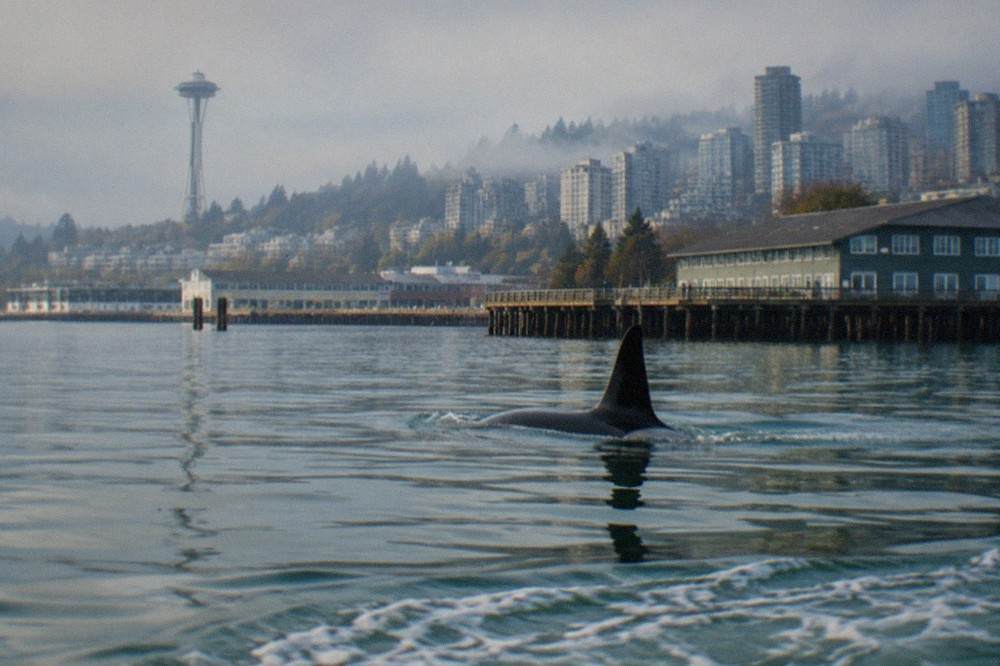
| Month | Species in window | Tour schedule | Daylight | Rating |
|---|---|---|---|---|
| January | Bigg's orcas | Very reduced, some closures | About 275 hours | Weak |
| February | Bigg's orcas, gray whales arriving | Limited, gray trips from the north | About 285 hours | Fair |
| March | Bigg's orcas, gray whales peak | Limited, growing | About 367 hours | Fair to good |
| April | Bigg's, grays, first SRKW chances | Daily departures resume | About 406 hours | Good |
| May | Bigg's, grays leaving, humpbacks arriving, SRKW | Full season underway | About 467 hours | Very good |
| June | Bigg's, humpbacks, SRKW core season | Daily, high season | About 477 hours | Very good |
| July | Bigg's, humpbacks, SRKW peak | Daily, busiest month | About 483 hours | Very good |
| August | Bigg's, humpbacks, SRKW, fish runs building | Daily, busy | About 444 hours | Excellent |
| September | Bigg's, humpbacks peaking, SRKW late window | Daily into late month | About 380 hours | Best overall |
| October | Bigg's, humpbacks, SRKW tail end | Reducing toward month end | About 340 hours | Good |
| November | Bigg's orcas | Reduced, some operators pause | About 282 hours | Weak |
| December | Bigg's orcas | Minimal, holiday closures | About 264 hours | Weak |
Two notes on reading the table. First, the daylight column matters more than it looks: a 3-to-5-hour whale trip in July with a sunset near 9 p.m. can depart at 3 p.m. and still finish in full light, while the same trip in November finishes in the dark and operators schedule around that. Second, the gray whale row is a genuinely different trip, it happens mostly out of the Edmonds area rather than the downtown waterfront, so if you are in town in March you may be better served by a gray-specific departure than by a downtown orca boat running its shoulder-season schedule.
Weather barely separates the summer months from each other. Seattle's 2026 rainfall ran below normal for most of the year, with July at 0.42 inches against a normal of 0.60 and August at 0.56 against 0.97, and even the wet months are cruise-compatible because whale boats run rain or shine with covered indoor seating. Temperature matters less than you might think as well: July and August average daily means around 67°F, but the water is cold all year, so layers are the correct answer in every month. The what-to-wear question has its own clothing guide for Seattle boat tours if you want the full packing logic.
What Rules Keep Boats Away From Whales Near Seattle?
Every vessel, tour boats included, must stay 1,000 yards from Southern Resident killer whales, travel under 7 knots within half a mile of them, and disengage the engine's transmission if they surface within 400 yards. Other orca ecotypes, including Bigg's transients, carry a 200-yard minimum, and boaters must not position a vessel in their path within 400 yards. These are Washington state law and federal baseline rules, not operator policies.
Washington law requires vessels to keep 1,000 yards from Southern Resident killer whales, and it took effect January 1, 2025 under Washington Senate Bill 5371 and RCW 77.15.740. It applies to everything with a motor or a paddle, commercial whale watching boats, private yachts, fishing skiffs and kayaks alike. The Washington Department of Fish and Wildlife publishes the rule and its enforcement posture on its newsroom page, and the federal side, including the 200-yard baseline for other orca ecotypes and the 100-yard general marine mammal distance, is laid out on the Be Whale Wise regulations page, the NOAA Fisheries partner site that operators treat as the reference card.
For a visitor, the rules translate into one practical expectation: you will not get close to the whales, and any boat that does is breaking the law, not giving you your money's worth. A responsible tour holds its distance, shuts down its transmission when required, and lets binoculars, long camera lenses and the whales' own movement do the work. Bigg's orcas at 200 to 400 yards can be spectacular, since orcas in active foraging will approach a drifting boat on their own terms. If a listing or a review mentions getting "right up next to" the animals, treat that as a red flag rather than a selling point.
The rules also explain something visitors sometimes misread as a tour being unadventurous: boats watching Bigg's orcas operate under the 200-yard rule rather than the 1,000-yard rule, so transient encounters often happen at closer range than Southern Resident encounters legally can. A September trip that finds transients hunting seals near a shoreline may well deliver the closer view of the day. The enforcement side is real too, WDFW patrols the Sound during peak season and issues penalties under the statute, so operators plan their approaches conservatively.
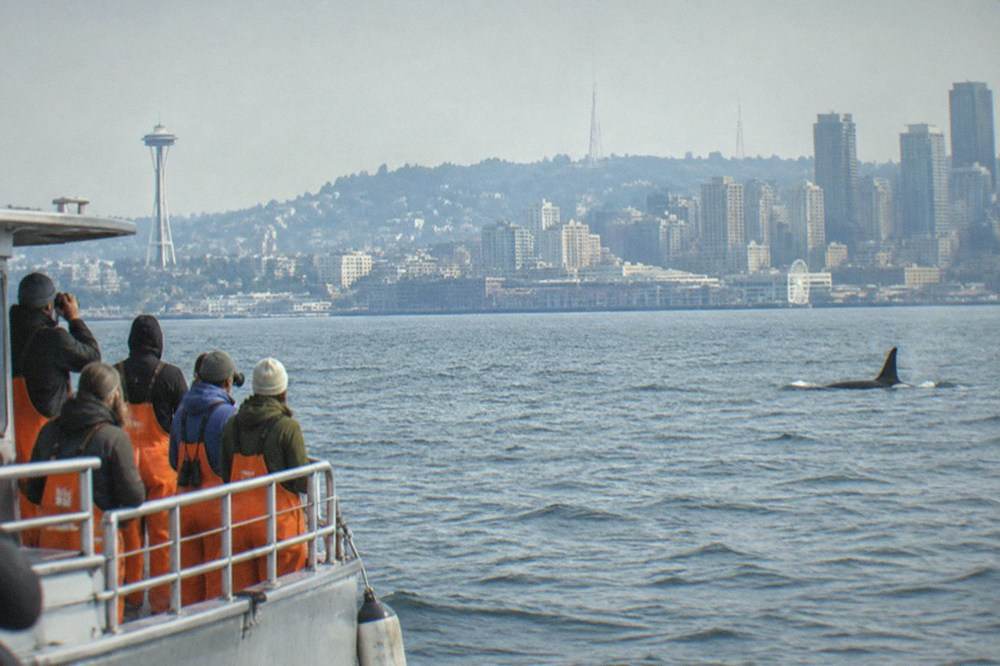
One more thing worth knowing: no operator on this site is allowed to promise you a whale, and neither is this article. One listing in the wider Seattle market advertises a sighting guarantee in its own marketing, and if you see that figure it belongs to the operator, not to this site. The honest framing is that the Salish Sea is one of the most reliably productive whale watching regions on the coast, the season windows above are drawn from real sighting data, and any single trip can still come up empty. If the experience itself, five hours of Puget Sound scenery, porpoises, seals, seabirds and the odd whale, sounds worth the ticket, the whale question answers itself. If only a whale will do, read whether whale watching in Seattle is worth it before you book.
Which Whale Watching Tours Depart From Seattle Itself?
Three tours on this roster depart from Seattle: a 3-to-5-hour wildlife and whale cruise from 2701 Alaskan Way rated 4.5 from 653 reviews from $150 per person, a half-day wildlife and whale cruise from the same street rated 4.3 from 390 reviews from $154.97, and a 10.5-hour whale watching plus Deception Pass tour from the Sheraton Grand Seattle rated 4.8 from 22 reviews from $368 per person.
The first two are variations on the same half-day idea, and the difference between them is mostly price, rating and departure logistics rather than route. The Seattle: Wildlife and Whale Watching Cruise, from 2701 Alaskan Way, carries the deepest review pool of any whale product on this roster, 653 reviews at 4.5, and its "Likely to sell out" badge means summer dates genuinely do fill. The Seattle: Half-Day Wildlife and Whale Watching Cruise, also from 2701 Alaskan Way, runs the same 3-to-5-hour format, is rated 4.3 from 390 reviews, and is priced from $154.97, with a "Booked 3 times today" badge on the listing. Both carry free cancellation, so the low-risk play is to book the one whose price and schedule suit and adjust later if plans change.
The third option is a different animal entirely. The Whale Watching + Deception Pass Tour from Seattle runs 10 hours 30 minutes, departs from the Sheraton Grand Seattle downtown, and pairs a whale watching segment with a visit to Deception Pass, the dramatic channel where Puget Sound squeezes between Fidalgo and Whidbey islands. It is rated 4.8 from 22 reviews, a small pool that reflects a newer or more niche product rather than a proven track record at scale, and it costs from $368 per person. For a visitor with one free day who wants whales plus the region's single most photogenic natural landmark, it is the strongest single-day itinerary on the roster, and its "Booked 2 times today" badge suggests steady demand.
| Tour | Duration | Departure point | Rating | Price | Reviews |
|---|---|---|---|---|---|
| Seattle: Wildlife and Whale Watching Cruise | 3 to 5 hours | 2701 Alaskan Way | 4.5 | from $150 per person | 653 |
| Seattle: Half-Day Wildlife and Whale Watching Cruise | 3 to 5 hours | 2701 Alaskan Way | 4.3 | from $154.97 | 390 |
| Whale Watching + Deception Pass Tour from Seattle | 10 hours 30 minutes | Sheraton Grand Seattle | 4.8 | from $368 per person | 22 |
All three carry free cancellation on their listings, which matters for a weather-dependent activity booked weeks ahead. None of the three is a whale guarantee, and the honest comparison is about time, budget and appetite for a long day. If you want the fullest picture of the category, including how these fit against whale trips that depart from other towns, the Seattle whale watching tours guide covers the whole landscape.
Does Weather Or Daylight Change Which Month You Should Pick?
Daylight matters more than weather. July delivers about 483 hours of it against roughly 264 in December, which is why tour schedules swell from April to October and thin out in winter, while rainfall differences between summer months are small enough that rain should rarely change your month choice. Boats run rain or shine, and the real winter constraint is fewer departures, not worse whale odds.
The seasonal schedule pattern is the single biggest practical fact in this whole question. Whale watching from Seattle runs daily or near-daily from spring through late September, then drops to reduced frequency, for example Wednesday, Friday and Saturday sailings with holiday closures, from early November into January. That is why December scores weak in the month table even though Bigg's orcas are statistically just as present in December as in July: you may simply find no downtown departure to book. If you are locked into a winter visit, the gray whale trips published for the February-to-April window out of the Edmonds area, on the Puget Sound Express gray whale schedule, are the one part of the whale calendar that reliably runs in late winter and early spring.
Temperature barely varies in a way that affects the water experience. Summer daily means sit in the low 60s to around 67°F, and even in July the wind on an open deck at 20 knots wants a fleece and a rain shell. The water is roughly the same cold in every month, and operators supply or rent the serious gear. What actually differs month to month is light: a July evening trip can watch the sun go down near 9 p.m., while by late September the sunset has pulled back to around 6:52 p.m., and November trips finish in the dark. If photographs are the goal, that argues for June through August for evening light, or September for the combination of long-enough days and softer angles.
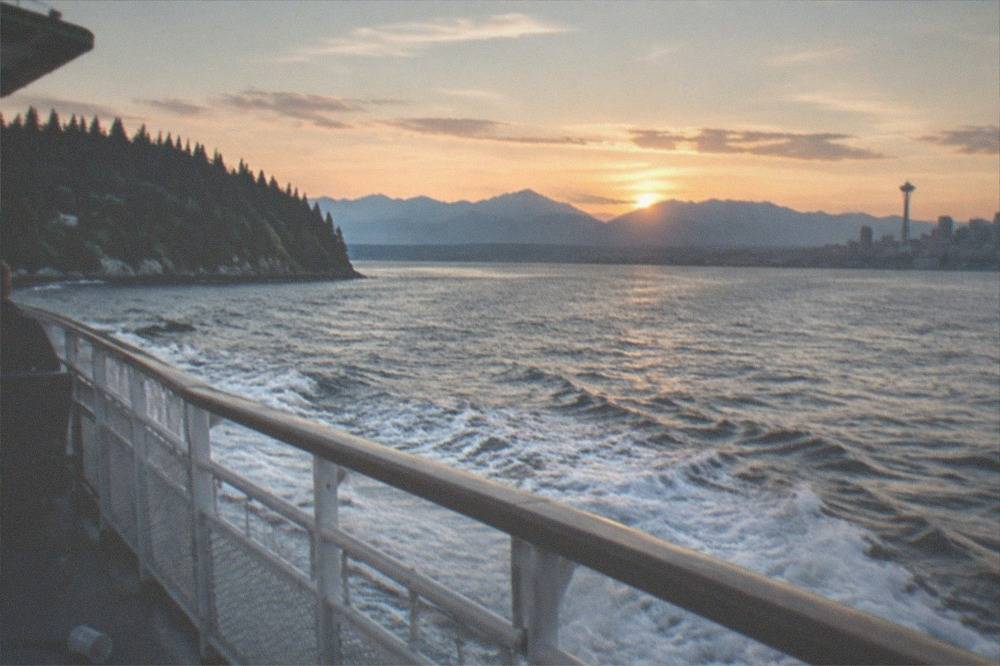
Rain is the factor visitors over-weight. Seattle's summer is genuinely dry, with July 2026 recording 0.42 inches of rain for the whole month, but even the wet season does not stop the boats, because the whales do not care and the vessels have covered salons. The one weather element that does occasionally scrub a trip is wind and sea state, and operators cancel or reschedule for safety, which is another reason the free-cancellation terms on all three Seattle whale listings are worth having. Book the month that matches your species target and your schedule, dress for the deck, and let the rain do what it wants.
For travelers putting the whole trip together, Seattle Boat Tours covers every other way to get on the water here, from Ballard Locks cruises to sunset sails, and the whale calendar above slots neatly into a week that also includes harbor sightseeing or a sailing trip. The half-day whale format leaves most of the day free, which is exactly why it pairs so well with a city itinerary.
Common Questions About Whale Watching Months In Seattle
What Month Is Best For Whale Watching In Seattle?
September is the strongest overall month, when the Southern Resident orca window, the humpback feeding season and the full high-season tour schedule all overlap. June through August are close behind and October is a good shoulder month. Any month can produce Bigg's transient orca sightings, but winter months have far fewer departures to book.
Which Whales Can You See Near Seattle?
Four groups: Bigg's transient orcas year-round, Southern Resident killer whales most reliably April and May through September and October, humpback whales May through October, and gray whales, the Sounders group, February through May. Every window is a typical pattern from sighting data, never a guarantee.
Are Whale Sightings Guaranteed On Seattle Tours?
No. No tour on this site, and no responsible operator anywhere in the region, guarantees a whale sighting. The season windows in this article describe when each species is most likely to be present, and any single trip can come home without an encounter.
How Close Do The Boats Get To The Whales?
Washington law requires every vessel to stay 1,000 yards from Southern Resident killer whales, travel under 7 knots within half a mile of them, and disengage the transmission if they surface within 400 yards. Other orcas, including Bigg's transients, carry a 200-yard minimum. Whales sometimes approach a drifting boat on their own.
Do Whale Watching Tours Run All Year From Seattle?
No. Downtown Seattle whale trips run daily or near-daily from spring through late September, then drop to reduced frequency, for example Wednesday, Friday and Saturday sailings with holiday closures, from early November into January. Gray whale trips from the Edmonds area north of the city are the reliable late-winter and early-spring option.
What Should You Wear On A Seattle Whale Watching Trip?
Layers, in every month. Summer air temperatures average in the 60s but the wind on an open deck is cold, and the water is cold year-round. A fleece, a waterproof shell, long pants and flat closed-toe shoes cover almost every trip, and binoculars are worth bringing since boats hold legal distance from the whales.